Chiropody may help assess and manage ingrown toenails, nail pain, thickened nails, and related foot discomfort. Care depends on the cause, severity, infection risk, footwear, nail shape, and health history. Patients with diabetes, spreading redness, drainage, severe pain, or recurring nail concerns should seek timely professional assessment.
Nail pain has a way of becoming impossible to ignore. A toenail pressing into the surrounding skin with every step. A nail that has thickened progressively until even a loosely fitting shoe applies uncomfortable pressure. A corner that has broken the skin and left the area tender, red, and worrying.
For many people in Mississauga, the first response to nail discomfort is attempting to manage it at home, cutting the nail shorter, soaking the foot, or trying to ease the pressure with cotton or tape. Sometimes this works. Often, particularly with recurring or infected ingrown toenails, it makes things worse. And for people managing diabetes or circulation concerns, any attempt at home nail care carries risks that are not always immediately apparent.
A chiropodist is a regulated health professional trained specifically in the assessment and care of the foot and lower limb, including the full range of nail conditions that cause discomfort. This article explains what ingrown toenails are, what else can cause nail pain, how a chiropody assessment approaches these concerns, what professional care may involve, and when nail symptoms need a more urgent response.
What Is an Ingrown Toenail?
An ingrown toenail occurs when the edge or corner of a toenail grows into the surrounding skin tissue rather than over it. The big toe is the most commonly affected, though any toenail can be involved. The result is a predictable pattern of discomfort: initial tenderness and pressure at the nail edge that may progress to redness, swelling, and, if the skin breaks, the risk of infection.
Ingrown toenails exist on a spectrum of severity. In early stages, the nail edge presses against the skin fold without penetrating it, causing discomfort that is manageable but persistent. As the nail grows further into the tissue, the skin may break down and the area may become inflamed. In more advanced or infected cases, the surrounding tissue may produce drainage, the redness may spread beyond the immediate nail fold, and the pain may be present even without direct pressure.
According to the College of Chiropodists of Ontario, ingrown toenails are among the most common nail conditions treated by registered chiropodists in Ontario and among the most frequently mismanaged at home; attempts to cut out the nail edge often worsen the underlying shape and increase recurrence risk.
Common Causes of Nail Pain
Ingrown toenails are the most commonly discussed source of nail pain, but they are not the only one. A chiropody assessment for nail discomfort considers the full range of nail and surrounding tissue conditions that may be contributing.
- Nail shape and growth pattern. Some people have naturally curved or involuted nail shapes where the sides curve significantly downward into the nail groove. This does not cause an ingrown toenail in the technical sense, but it can produce significant pressure and discomfort, particularly with footwear. Understanding whether the concern is true nail penetration or shape-related pressure affects how care is approached.
- Inappropriate trimming technique. Cutting the nail too short, rounding the corners, or tearing at the nail edges rather than cutting cleanly across are among the most common contributing factors to ingrown toenail development. The nail corner, left shorter than the surrounding skin fold, may be displaced beneath the skin fold as the nail grows, embedding itself progressively with each millimeter of regrowth.
- Footwear pressure. Shoes that are too tight across the toe box, too shallow in the toe depth, or that have seams pressing on the nail area create sustained lateral pressure that can force the nail edge into the surrounding tissue. High-heeled footwear that shifts body weight forward and compresses the toes is a particularly common contributor.
- Thickened nails (onychauxis) and fungal nail infection (onychomycosis). Nails that have thickened due to repeated trauma, circulation changes, or fungal infection create pressure in enclosed footwear and may become difficult or painful to trim safely. Thickened nails require professional assessment to determine the cause and appropriate management. At-home attempts to thin or cut significantly thickened nails carry real injury risk, particularly for older patients or those with reduced sensation.
- Nail trauma. A significant impact—dropping something on a toenail or stubbing it forcefully—can cause blood pooling under the nail, partial separation, or changes in how the nail regrows afterward. Post-traumatic nail changes sometimes produce ongoing discomfort that does not resolve without professional management.
- Skin conditions affecting the nail unit. Conditions such as psoriasis can affect the nail bed, nail plate, and surrounding skin, producing nail pitting, thickening, and discomfort that may look like other nail conditions but requires a different assessment and management approach.
As the Innova article on common foot problems a chiropodist can treat outlines, nail concerns represent a significant proportion of chiropody presentations and are approached through the same assessment-first, individualized model as other foot health concerns.
When Nail Pain May Need Professional Care
Not all nail discomfort requires immediate professional intervention. A toenail that is mildly tender after a long run, or a small area of pressure from a new pair of shoes that resolves within a day or two, may not require a chiropody appointment. The following signs suggest that professional assessment is the appropriate next step.
- Redness that is spreading beyond the immediate nail area. Spreading redness may indicate that a local infection is extending into surrounding tissue. This warrants timely assessment.
- Drainage, pus, or an odor from the nail area. These signs indicate infection that is beyond the early stage and should not be managed at home or left unaddressed.
- Severe pain or swelling that is limiting weight-bearing. Pain significant enough to change how you walk warrants professional assessment rather than continued self-management.
- Any nail concern in a person managing diabetes. Diabetes affects both circulation and nerve sensation in the feet. A nail concern that might resolve straightforwardly in a healthy person can escalate in a person with diabetes. Timely professional nail care is not optional for this population; it is a component of diabetes management. The Innova article on diabetic foot care in Mississauga covers this in detail.
- Recurring ingrown toenails in the same location. If the same nail edge keeps becoming problematic despite correct trimming technique and appropriate footwear, the nail shape or growth pattern may require a structural intervention that home care cannot address.
- Nails that are significantly thickened or discolored. These changes may indicate fungal infection or other conditions that require professional assessment to diagnose and manage appropriately. The Innova resource on 5 warning signs you need to see a chiropodist provides a useful reference for when to seek care.
How a Chiropodist Assesses Ingrown Toenails
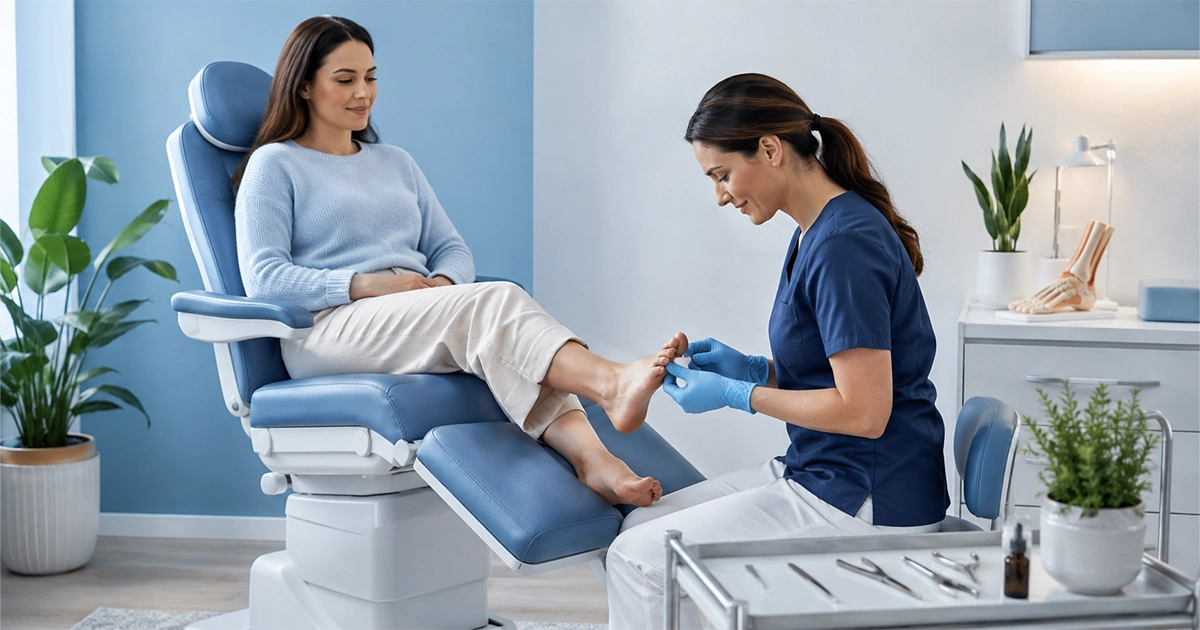
A chiropody assessment for nail pain at Innova begins with a conversation about your symptoms, how long they have been present, previous episodes, your current footwear, trimming habits, and general health history, including any conditions affecting circulation or healing.
Neal Andrews, Innova’s licensed chiropodist registered with the College of Chiropodists of Ontario, then examines the affected nail and surrounding tissue directly. This covers nail edge position and whether true penetration is occurring, signs of infection including warmth, redness, swelling, or drainage, nail plate thickness and texture, the condition of the surrounding skin and nail fold tissue, and a review of your most frequently worn footwear.
Based on these findings, Neal discusses the assessment and the most appropriate approach for your specific situation.
What Chiropody Nail Care May Involve
Professional chiropody nail care covers a range from conservative management to clinical procedures, depending on assessment findings.
- Nail debridement and reduction. For thickened, overgrown, or difficult-to-manage nails, professional debridement reduces nail thickness and length safely using clinical tools without the injury risk that home management carries.
- Nail edge removal and packing. For ingrown toenails pressing against or beginning to penetrate the skin without infection, careful removal of the offending nail edge and temporary packing of the nail groove to encourage the nail to grow over rather than into the tissue is a common conservative approach.
- Partial nail avulsion (nail surgery). For recurring ingrown toenails that do not resolve with conservative management, partial nail avulsion may be recommended. This minor procedure removes a narrow strip of the nail at the affected edge under local anesthetic, with a matrixectomy to prevent that portion from regrowing where the pattern is likely to repeat. Nail surgery is performed within the regulated scope of chiropody practice by Neal Andrews.
- Footwear and trimming guidance. Professional guidance on correct nail trimming and appropriate footwear is part of every nail care appointment, the factors most directly within the patient’s control for preventing recurrence. The Innova article on how chiropody helps with foot pain management provides broader context.
Footwear, Nail Trimming, and Prevention
For patients who want to reduce the likelihood of recurrence between appointments, the following guidance reflects what chiropodists most consistently recommend.
- Nail trimming technique. Trim the nail straight across, leaving the corners at or slightly beyond the tip of the toe rather than rounding or cutting into them. Use clean nail clippers appropriate for toenails rather than scissors or fingernail clippers. Trim after bathing when nails are softer, but avoid cutting so short that the nail edge sits below the skin fold level. If you cannot comfortably see and reach your toenails, professional nail care at regular intervals is safer than attempting home trimming in compromised conditions.
- Footwear selection. Choose footwear with a wide, deep toe box that allows the toes to rest without compression. Footwear that is too narrow, too shallow, or that forces the toes into a cramped position creates the sustained lateral pressure that promotes ingrown nail development. As the Innova article on the role of chiropody in preventing chronic foot problems notes, footwear is one of the most consistently underappreciated contributors to recurring nail concerns.
Diabetic Foot Considerations and Nail Care
For people managing diabetes, nail care is not an optional aspect of foot health. It is a clinical priority.
Peripheral neuropathy means a nail that has penetrated the skin may not produce the pain that would prompt a non-diabetic person to seek care. By the time the concern is noticed visually, infection may already be established. Peripheral arterial disease slows healing and means even a small area of skin breakdown carries greater infection risk than it would in a person with healthy circulation.
According to Diabetes Canada, foot complications are among the most serious consequences of long-standing diabetes, and preventive foot care, including regular professional nail care, is one of the most evidence-supported strategies for reducing that risk. The Innova article on diabetic foot care in Mississauga provides a detailed guide to what regular chiropody visits involve for this population. A first appointment with Neal Andrews establishes a baseline and a recommended monitoring schedule for your specific situation.
Chiropody Care at Innova in Mississauga
At Innova Integrated Wellness Centre, chiropody for nail concerns is delivered by Neal Andrews, a licensed chiropodist registered with the College of Chiropodists of Ontario. Every appointment begins with understanding your specific concern, health history, and contributing factors before any management is discussed. For a broader picture of how nail health connects to overall foot function, the Innova article on how foot health impacts your whole body provides useful context.
Most extended health benefit plans include chiropody coverage. Direct billing to over 25 insurers is available at Innova. The direct billing guide explains how insurance works for chiropody. No physician referral is required.
Book your chiropody assessment at Innova Integrated Wellness Centre in Mississauga. Book an Appointment Online | Call: (905) 814-9355 | 49 Queen Street South, Unit 8, Mississauga, ON
Conclusion
Ingrown toenails, thickened nails, and recurring nail discomfort can become increasingly difficult to manage when the underlying cause is not addressed. Proper nail care, suitable footwear, and professional assessment may help reduce irritation and determine whether conservative care or a more specific treatment approach is appropriate. If you notice recurring pain, swelling, redness, drainage, or changes in the nail, particularly if you have diabetes or circulation concerns, timely assessment is important.
At Innova Integrated Wellness Centre in Mississauga, licensed chiropodist Neal Andrews can assess your nail concern, identify contributing factors, and discuss appropriate care options based on your individual needs.
Ready to get your nail concern assessed? Book your chiropody appointment online or call Innova at (905) 814-9355.
Frequently Asked Questions
A chiropodist may assess and manage ingrown toenails through a range of approaches depending on the severity, infection status, and whether the concern is recurring. This may include conservative nail edge removal and packing, professional debridement, or, for recurring presentations, a minor nail surgery procedure. The appropriate approach is determined by assessment findings. Timely professional care is particularly important for people with diabetes or circulation concerns, where nail complications carry higher risk.
Trim straight across, leaving the corners at or slightly beyond the tip of the toe. Avoid rounding the corners or cutting down into the nail groove. Use clean, sharp toenail clippers rather than scissors or fingernail clippers. Trim after bathing when the nail is softer, but not so short that the edge sits below the surrounding skin fold. If you have difficulty seeing or reaching your toenails, or if you have diabetes, regular professional nail care is safer than home management.
Seek professional assessment for an ingrown toenail with spreading redness, swelling, drainage, or pus; severe pain limiting weight-bearing; any nail concern if you have diabetes; a nail that has been problematic multiple times in the same location; or any nail that has penetrated the surrounding skin. Home management attempts – including cutting out the nail corner, packing with cotton, or using over-the-counter ingrown toenail products – often worsen the underlying nail shape and increase recurrence risk when the nail is already infected or significantly embedded.
Yes. For recurring ingrown toenails that do not resolve with conservative management, Neal Andrews performs partial nail avulsion – a minor procedure under local anaesthetic that removes the affected nail edge. Where the nail is likely to regrow in the same problematic pattern, a matrixectomy to prevent that portion of the nail regrowing may be combined with the avulsion. Both procedures are performed within the regulated scope of chiropody practice. Your chiropodist will discuss whether this approach is appropriate based on your assessment findings and history.
This depends on the individual’s level of circulation and sensation impairment, nail condition, and self-care capacity. Many people managing diabetes benefit from professional nail care every six to eight weeks. Those with significant neuropathy, poor circulation, or a history of foot complications may need more frequent monitoring. A first chiropody appointment with Neal Andrews at Innova provides a baseline assessment and a clear recommendation for how frequently professional care is appropriate for your specific situation.
Many extended health benefit plans in Ontario include chiropody coverage. The annual maximum and plan-specific requirements vary. At Innova, direct billing is available to over 25 insurance providers. Our administrative team can verify your coverage before your appointment. The direct billing guide explains how insurance works for chiropody and other wellness services at Innova. No physician referral is required to book a chiropody appointment.