Foot health influences how comfortably you stand, walk and move through daily life. When a heel, toenail, joint or pressure area becomes painful, you may shorten your steps, place less weight on one side or avoid pushing through part of the foot. These adaptations can change gait and may increase demand on nearby joints and muscles.
That does not mean every knee, hip or back problem begins in the feet. Pain and movement are influenced by many factors, including strength, previous injury, activity level, health conditions and the nervous system. Foot posture alone is rarely a complete explanation.
A chiropodist can assess whether a foot condition, footwear issue, pressure pattern or gait change may be relevant. For people seeking chiropody in Mississauga, the goal is to identify treatable foot concerns and coordinate with other providers when symptoms involve broader movement needs.
Can foot health affect the knees, hips or back?
Foot pain or altered gait may change how weight is transferred during standing and walking, which can influence the knees, hips or back in some people. However, these relationships are multifactorial and do not prove that the feet are the sole cause. Assessment helps determine which factors are clinically relevant.
The Feet Are Part of a Connected Movement System
The feet provide contact with the ground and help manage pressure during standing, walking and running. Movement is shared across the feet, ankles, knees, hips, pelvis and trunk.
The body is also adaptable. Many people have flat feet, high arches, toe-out walking or natural asymmetry without pain.
Research supports a cautious interpretation. A systematic review of foot posture and lower-limb overuse injuries found only small associations between pronated foot posture and selected conditions. The authors emphasized that foot posture should be considered one part of a multifactorial assessment.
A chiropodist should therefore connect foot findings to the patient’s symptoms, activities and goals rather than assuming that shape or posture alone explains pain elsewhere.
How Foot Pain May Change Gait
Gait includes step length, timing, weight transfer, foot placement and how the joints work together.
Pain may lead someone to:
- Take shorter steps
- Spend less time on one foot
- Shift weight toward the other side
- Avoid pushing through a painful toe
- Walk more slowly
- Reduce walking distance
These changes may protect a painful area in the short term. If the problem continues, the altered pattern may become tiring or place unfamiliar demand on other tissues.
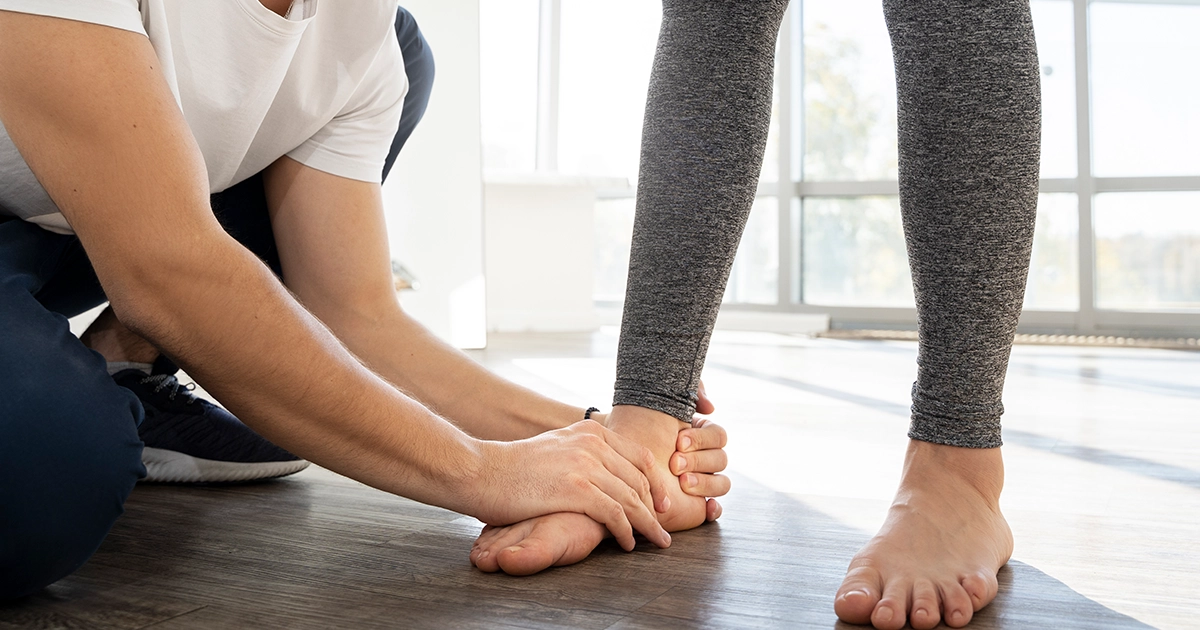
A chiropodist may assess the painful area, footwear, joint movement, sensation, pressure and walking pattern. Treatment may include professional skin or nail care, footwear guidance, pressure offloading, activity advice or orthotic consideration.
For condition-specific guidance, read how chiropody helps with foot pain in Mississauga.
Foot Health and Knee Pain
The foot and knee interact during walking, running, stairs and squatting. Foot position may influence rotation through the lower leg, while hip and knee strength can also affect how the foot loads the ground.
Possible foot-related contributors may include:
- Pain that causes uneven weight transfer
- Unsuitable footwear
- A rapid change in walking or running volume
- Limited ankle movement
- Selected gait patterns
These findings do not establish that the feet are causing knee pain. Knee symptoms may also involve injury, arthritis, training load, hip strength or other factors.
A chiropodist may address relevant foot or footwear concerns. When the main issue involves knee strength, stairs, movement tolerance or return to activity, physiotherapy in Mississauga may be more appropriate or may complement chiropody.
Foot Health and Hip Discomfort
Hip discomfort can change walking, and foot pain can also alter how the hip is used. Someone avoiding pressure on one foot may shorten the stance phase or shift the body differently during each step.
A population study examining foot pain and other lower-body joint pain found associations between foot pain and knee or hip pain, but association does not prove that one condition caused the other. Multiple painful areas may reflect arthritis, activity demands, previous injury or shared movement adaptations.
A chiropody assessment may be useful when hip symptoms occur alongside heel pain, toe deformity, uneven shoe wear or a noticeable gait change. Severe pain, trauma, fever or inability to bear weight requires prompt medical assessment.
Foot Function and Lower-Back Pain
It is common to hear that flat feet or overpronation directly cause back pain. Evidence is more complex.
A Framingham Study analysis found no association between static foot posture and low-back pain. It found an association between pronated foot function and low-back pain in women, but this observational finding did not prove causation or show that orthotics would resolve symptoms.
Back pain may be influenced by workload, sleep, stress, previous injury, strength and physical capacity. Foot assessment is most relevant when back symptoms occur with foot pain, a clear gait change or difficulty tolerating standing and walking.
A chiropodist can assess foot-related factors, while chiropractic care in Mississauga may be considered for selected back, joint or movement concerns. Persistent or worsening symptoms may require medical or physiotherapy evaluation.
Foot Conditions That May Affect Movement Comfort
Heel and Plantar-Fascia Pain
Pain beneath the heel may be noticeable during the first steps after rest or after prolonged standing. People often shorten their stride or avoid loading the heel.
Corns, Calluses and Nail Problems
Painful thickened skin or an ingrown nail can make a person avoid pressure beneath the forefoot or through a toe. Professional care and pressure management may improve comfort.
Bunions and Toe Deformities
Toe crowding and shoe pressure may affect push-off and footwear tolerance. Conservative care may manage irritation but does not reverse every deformity.
Reduced Sensation
Diabetes and some neurological conditions can reduce awareness of pressure or injury. This requires appropriate foot monitoring and may affect confidence with walking.
For a fuller overview, see common foot problems a chiropodist in Mississauga can assess.
What a Gait and Biomechanical Assessment May Include
A chiropody appointment may review:
- Symptoms and medical history
- Previous injuries
- Foot and ankle movement
- Skin, nails and sensation
- Foot structure and pressure areas
- Standing and walking
- Footwear and shoe wear
- Work, sport and daily activity
A biomechanical examination should be performed when clinically relevant, not simply because someone has knee, hip or back pain.
The assessment may show that a foot concern is relevant, that another provider should be involved or that the feet are unlikely to be the main contributor. All three conclusions can guide appropriate care.
Can Custom Orthotics Help?
Custom foot orthotics may be prescribed when an individualized assessment identifies a need for pressure redistribution, accommodation or support.
The College of Chiropodists of Ontario’s orthotics standard requires orthotic care to consider medical history, footwear, activities and work environment. A device should have a defined purpose, be fitted properly and be reviewed after dispensing.
Orthotics should not be presented as devices that correct whole-body alignment, fix every knee or back problem, prevent all injuries or guarantee lasting relief.
Some people may benefit from an over-the-counter insert, footwear change or another treatment instead. The appropriate option depends on the assessment.
When Integrated Care May Be Helpful
Chiropody may address foot pain, skin and nail concerns, footwear, pressure and orthotic needs.
Physiotherapy in Mississauga may be appropriate when the main needs involve strength, balance, gait rehabilitation, stairs or return to work and sport.
Chiropractic care in Mississauga may be considered for assessment of selected back, joint or movement-related concerns. It should not assume that foot posture has “misaligned” the spine.
Registered massage therapy in Mississauga may support temporary relief of muscle tension or soreness. Massage does not correct foot structure or replace treatment of a wound, ingrown nail, fracture or neurological condition.
Integrated care is most useful when each service has a distinct role. More treatment is not automatically better.
Balance, Foot Health and Older Adults
Foot pain, reduced sensation and unsuitable footwear may contribute to instability in some older adults. Falls are also influenced by vision, medications, strength, blood pressure, the inner ear and environmental hazards.
A chiropodist may assess foot-related contributors and recommend treatment, footwear or referral. Repeated falls, dizziness, fainting or sudden balance changes need broader assessment.
Read more in how chiropody may support balance and stability.
When to Seek Prompt Medical Care
Seek prompt assessment for:
- Inability to bear weight
- Major trauma or visible deformity
- A hot, red or severely swollen joint
- An open wound or spreading infection
- Sudden colour or temperature change
- New or worsening weakness
- Loss of bladder or bowel control
- Numbness around the groin
- Chest pain or breathing difficulty
- Sudden facial weakness or difficulty speaking
People with diabetes, reduced circulation or impaired sensation should seek early care for wounds, drainage, swelling or colour changes.
Integrated Foot and Musculoskeletal Care at Innova
At Innova Integrated Wellness Centre, chiropody begins with an individualized assessment of symptoms, medical history, skin, nails, sensation, foot structure, footwear, pressure and walking pattern.
Care is provided by Neal Andrews, Chiropodist, who is registered with the College of Chiropodists of Ontario. His profile describes experience in general chiropody, musculoskeletal foot and ankle concerns, sports medicine, pediatric foot care and diabetic foot care.
Recommendations may include professional foot care, footwear guidance, pressure offloading, biomechanical assessment, orthotic consideration or referral.
When symptoms also involve strength, gait rehabilitation, back or joint concerns, or muscle tension, care may be coordinated with physiotherapy, chiropractic or registered massage therapy. Coordination should follow clinical need rather than the assumption that every foot problem requires multiple services.
Frequently Asked Questions
Foot pain or gait changes may influence weight transfer and contribute to symptoms elsewhere in some people. However, knee, hip and back pain usually have several possible influences. Assessment is needed before concluding that the feet are the cause.
No. Orthotics may redistribute pressure or support foot function for a specific assessed condition. They cannot guarantee correction of posture, spinal alignment or pain throughout the body.
Consider chiropody when symptoms occur with foot pain, pressure areas, footwear problems, uneven shoe wear or a noticeable gait change. If the main concern is the knee, hip or back, physiotherapy, chiropractic or medical assessment may be more appropriate.
Yes. People may shorten their steps or shift weight away from a painful heel. A chiropodist can assess the cause and recommend suitable care. Severe pain after injury or inability to bear weight requires prompt assessment.
No. Many people with flat feet have no symptoms and need no treatment. Foot posture becomes more relevant when it connects to pain, pressure, reduced function or a specific activity problem.
Integrated care may be useful when someone has distinct needs involving foot health, strength, gait rehabilitation, joint symptoms or muscle tension. Each service should have a defined purpose.
A physician’s referral is generally not required to book chiropody in Ontario. Insurance plans may have separate requirements for chiropody or custom orthotics, so confirm coverage before treatment.
Book a Chiropody Assessment in Mississauga
Foot pain and gait changes can affect everyday movement, but they should not automatically be blamed for every knee, hip or back symptom. A chiropody assessment can determine whether foot health, footwear or pressure may be relevant and whether coordinated care is appropriate.
Book a chiropody appointment at Innova Integrated Wellness Centre or call (905) 814-9355.
Innova Integrated Wellness Centre
49 Queen Street South, Unit 8
Streetsville, Mississauga, Ontario L5M 1K5