There is a category of health concerns that millions of people quietly manage every day without ever seeking professional care. Leaking urine when they laugh, cough, or sneeze. Pelvic pain that has been present since childbirth. A persistent sense of heaviness or pressure in the pelvic region. Pain during intimacy that has made a once normal part of life feel impossible. Constipation that no dietary change has fully resolved.
These concerns share something important in common. They are almost always treatable. And the treatment that evidence most consistently points to is pelvic floor physiotherapy – a specialized, clinically rigorous discipline that remains deeply under-utilized in Canada, largely because so many people do not know it exists, do not realize their symptoms qualify for it, or feel too uncomfortable to bring it up with a healthcare provider.
This blog exists to change that. It covers what pelvic floor physiotherapy actually is from a clinical perspective, which conditions it treats and who is most likely to benefit, what a complete course of assessment and treatment looks like at Innova Integrated Wellness Centre in Mississauga, and what you should realistically expect in terms of outcomes and timelines. The language throughout is direct and clinical because that is what people navigating these concerns deserve.
The Pelvic Floor: What It Is and Why It Matters
The pelvic floor is a group of muscles, ligaments, connective tissues, and nerves that form a hammock-like structure spanning the base of the pelvis from the pubic bone at the front to the tailbone at the back. This group of structures has several critical functions that most people never consciously think about until something goes wrong.
The pelvic floor supports the pelvic organs – the bladder, uterus (in women), and rectum – against the downward force of gravity and the increased intra-abdominal pressure generated by activities like coughing, sneezing, lifting, and exercise. It controls the sphincters that regulate urinary and bowel function, providing the voluntary control that allows urination and bowel movements to happen at appropriate times and not otherwise.
It plays an essential role in sexual function, contributing to arousal, sensation, and comfort during intimacy. And it works as a dynamic stabilizer of the lumbopelvic region, integrating with the deep abdominal muscles, the diaphragm, and the deep spinal stabilizers to support spinal and pelvic alignment during movement.
According to Statistics Canada, approximately one in three women experiences a pelvic floor disorder at some point in their lifetime. Urinary incontinence alone affects an estimated 3.3 million Canadians, and the vast majority never receive specialized pelvic health care. The reasons are multiple: stigma, the mistaken belief that these symptoms are a normal consequence of childbirth or aging that must simply be accepted, and a lack of awareness that a regulated, evidence-based clinical treatment option exists.
Pelvic floor physiotherapy addresses dysfunction in this system whether the muscles are too weak, too tight, poorly coordinated, or neurologically impaired through a structured, individualized clinical approach that produces measurable improvements across the full range of pelvic floor conditions.
Clinical Note:
Pelvic floor physiotherapy is a regulated physiotherapy service in Ontario. Assessment and treatment should always be performed with informed consent, privacy, and respect for patient comfort.
What Pelvic Floor Physiotherapy Actually Treats
The scope of conditions addressed by pelvic floor physiotherapy is considerably broader than most people realize. The following represent the most common presentations seen in clinical practice:
Urinary Incontinence
Stress urinary incontinence, leaking urine with coughing, sneezing, laughing, jumping, or lifting, occurs when the pelvic floor muscles and urethral sphincter cannot generate sufficient force to resist the sudden increase in intra-abdominal pressure. Urge incontinence a sudden, intense urge to urinate that is difficult to defer, with or without leakage reflects overactivity and poor coordination of the detrusor muscle of the bladder and the pelvic floor. Mixed incontinence involves elements of both. All three respond well to pelvic floor physiotherapy, which is the first-line recommended intervention in Canadian clinical guidelines before surgical or pharmaceutical approaches are considered.
Pelvic Organ Prolapse
Pelvic organ prolapse occurs when the pelvic floor structures are insufficiently able to support one or more pelvic organs, which then descend into or beyond the vaginal canal. This produces symptoms ranging from a sense of pressure or bulging in the vaginal region to urinary and bowel difficulties and discomfort with physical activity. Pelvic floor physiotherapy strengthens the supporting structures, improves functional coordination, and teaches load management strategies that reduce prolapse symptoms and, in milder cases, may significantly reduce the degree of descent over time.
Postpartum Pelvic Floor Recovery
Vaginal delivery places extraordinary mechanical demands on the pelvic floor. The muscles, connective tissues, and nerves of the pelvic floor are stretched to lengths significantly beyond their normal range during labor and delivery. Perineal tearing, episiotomy, and the prolonged pushing phase all create tissue injury that, even when sutured and apparently healed, may leave the pelvic floor functionally compromised in ways that persist for months or years if not addressed through rehabilitation.
Cesarean delivery is not without pelvic floor consequences either. The abdominal scar tissue from a C-section can restrict fascial mobility, affect the function of the deep abdominal stabilizers that work with the pelvic floor and contribute to altered movement patterns and lower back or pelvic pain in the postpartum period.
Research published in the International Urogynecology Journal consistently demonstrates that early pelvic floor physiotherapy after delivery significantly improves recovery of strength, continence, and functional capacity compared to no intervention. Yet in Canada, postpartum pelvic floor care remains far less routinely offered than in many comparable healthcare systems.
Diastasis Recti
Diastasis recti is a separation of the rectus abdominis muscles at the linea alba, the midline connective tissue of the abdomen. It is extremely common during pregnancy, occurring to some degree in the majority of women during the third trimester. When significant and persistent postpartum, it affects the integrity of the abdominal canister, impairs the ability to generate and manage intra-abdominal pressure, and contributes to lower back pain, pelvic instability, and core functional weakness.
Pelvic floor physiotherapy addresses diastasis recti through progressive exercise rehabilitation, breathing and pressure management training, and load grading strategies. The goal is to restore the functional capacity of the deep abdominal system, not simply to close the gap, which is a distinction that requires clinical expertise to navigate appropriately.
Pelvic Pain and Vaginismus
Pelvic pain is a broad category that includes persistent discomfort in the lower abdomen, pelvis, or perineum that is not fully explained by another identifiable pathology. It is among the most underdiagnosed and undertreated conditions in women’s health, with an average of several years between symptom onset and appropriate diagnosis.
Vaginismus is the involuntary contraction of the pelvic floor muscles in response to actual or anticipated vaginal penetration, making internal examinations, tampon insertion, or sexual intercourse painful or impossible. Dyspareunia refers more broadly to pain during or after intercourse with multiple potential causes, including hypertonicity (excessive tension) of the pelvic floor.
For all of these presentations, pelvic floor physiotherapy uses a combination of manual internal and external soft tissue therapy, progressive desensitization, muscle relaxation techniques, and functional rehabilitation to restore comfortable, voluntary control.
Bowel Dysfunction
The pelvic floor coordinates closely with the anal sphincter and rectum in regulating bowel function. Pelvic floor dysfunction contributes to constipation through a mechanism called “dyssynergia,” where the pelvic floor contracts rather than relaxing during defecation, creating an obstruction to normal bowel movement. Fecal urgency and fecal incontinence can also have a pelvic floor component. These presentations are addressed through biofeedback-assisted training, bowel habits education, and specific pelvic floor retraining protocols.
Tailbone (Coccyx) Pain
Coccydynia, pain in the tailbone, is frequently related to the pelvic floor muscles that attach to the coccyx and sacrum. It may follow a fall directly onto the tailbone, difficult childbirth, or prolonged sitting on hard surfaces, or arise without an obvious precipitating event. Pelvic floor physiotherapy addresses the muscular component of coccydynia through internal and external manual therapy, which is often significantly more effective than general pain management approaches.
Who Should See a Pelvic Floor Physiotherapist in Mississauga
The honest answer is that a broader range of people than currently access this care would benefit from it. The clinical indications extend well beyond the postpartum population most commonly associated with pelvic health care.
- Postpartum women ideally at six weeks after vaginal delivery and eight to twelve weeks after cesarean section benefit from a pelvic floor assessment regardless of whether they have obvious symptoms. Many women have subclinical dysfunction that has not yet produced clear symptoms but that will do so with increased activity, return to exercise, or subsequent pregnancies.
- Pregnant women benefit from pelvic floor physiotherapy during pregnancy as a preventive measure. Perineal massage education, load management strategies, positioning guidance for labor, and breathing and pushing technique instruction all reduce the degree of pelvic floor injury at delivery.
- Perimenopausal and postmenopausal women experience hormonal changes, particularly the decline in estrogen, that affect the elasticity and strength of pelvic floor tissues, increasing the risk of prolapse, incontinence, and painful intercourse. Pelvic floor physiotherapy addresses these changes with targeted rehabilitation and, in coordination with the naturopathy team, lifestyle and nutritional strategies that support tissue health.
- Women with chronic pelvic pain, endometriosis-related pelvic tension, interstitial cystitis, or vulvodynia frequently have a significant pelvic floor hypertonicity component to their presentations that responds well to specialized physiotherapy.
- People recovering from pelvic or abdominal surgery, including hysterectomy, bladder suspension procedures, and colorectal surgery, often develop scar tissue and compensatory movement patterns that benefit from pelvic floor rehabilitation.
- Men are not outside the scope of pelvic floor physiotherapy. Post-prostatectomy urinary incontinence, pelvic pain syndromes, and erectile dysfunction with a pelvic floor neuromuscular component are all presentations that a trained pelvic floor physiotherapist can address.
What to Expect: The Assessment and Treatment Process at Innova
Many people delay seeking pelvic floor physiotherapy because they are uncertain – and sometimes anxious – about what the assessment involves. A clear picture of the process removes a significant barrier to seeking care.
The Initial Consultation
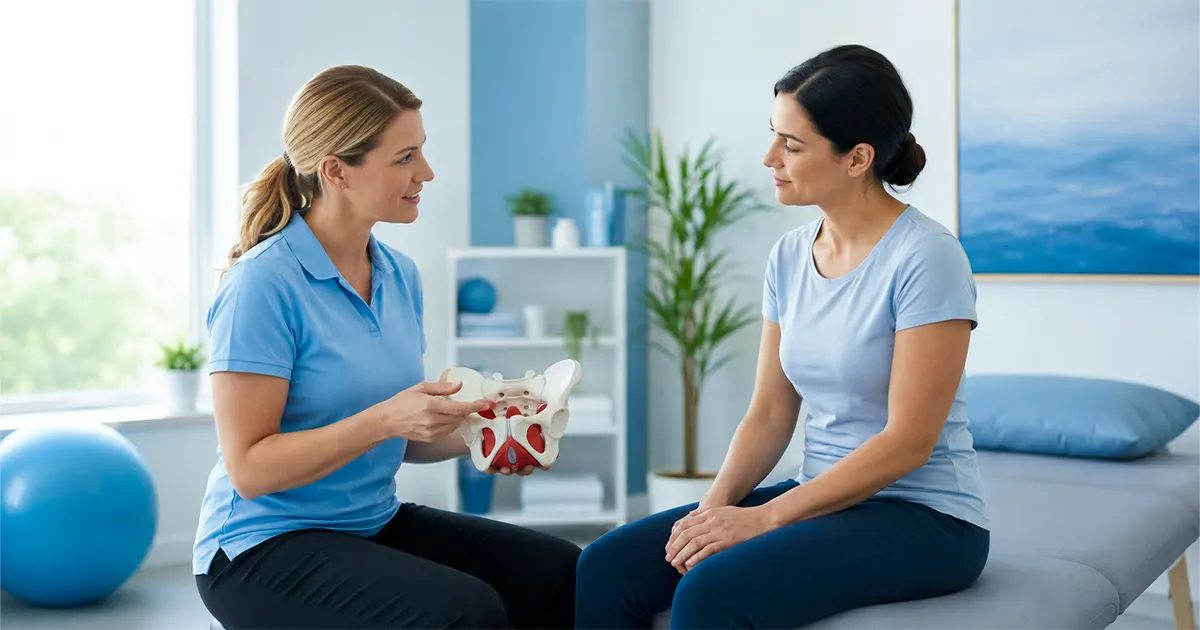
Your first appointment at Innova Integrated Wellness Centre begins with a comprehensive verbal assessment. Your physiotherapist will take a detailed history of your symptoms, including onset, aggravating and relieving factors, bladder and bowel habits, obstetric history, surgical history, current medications, and your health goals. This is a clinical conversation conducted with complete professionalism and without judgment. No question is inappropriate. Everything is confidential.
You will also be asked to complete a bladder and bowel diary if relevant to your presentation, and you may be given validated symptom questionnaires that allow objective tracking of your progress across appointments.
External Physical Assessment
Before any internal assessment, your physiotherapist will conduct a thorough external examination. This includes postural assessment, observation of breathing patterns and how you manage intra-abdominal pressure, assessment of the deep abdominal muscles and their coordination with the pelvic floor, lumbar and hip range of motion, and any relevant neurological screening.
External assessment of the perineal region observation of resting tone, pelvic floor contraction and relaxation, and any external scar tissue may also be conducted at this stage with your consent and in a manner that maintains your comfort throughout.
Internal Assessment
Internal examination of the pelvic floor conducted with a single gloved finger vaginally or rectally depending on the nature of the presentation is the most specific way to assess pelvic floor muscle tone, strength, endurance, coordination, and the presence of trigger points or tender areas within the muscles themselves. This assessment provides information that no external assessment or imaging can replicate.
Internal assessment is always conducted with informed consent and can be declined or deferred to a later appointment if you are not ready. Many patients choose to proceed with a few sessions of external treatment before agreeing to internal assessment, and this is entirely respected at Innova. Your comfort and consent govern the pace of care.
Treatment Approaches
Based on assessment findings, your treatment plan is individually designed and may include several of the following components.
- Pelvic floor muscle re-education addresses either weakness (hypotonicity) or excessive tension (hypertonicity), which are opposite presentations that require fundamentally different treatment approaches. The common instruction to simply “do Kegels” is only appropriate for hypotonicity presentations and many people presenting with urgency, pelvic pain, or vaginismus have hypertonicity that Kegel exercises would worsen. Assessment determines which approach is indicated.
- Internal manual therapy involves specific manual techniques applied to the pelvic floor muscles internally to release trigger points, reduce muscle tension, improve tissue mobility, and normalize neural sensitivity. This is the primary treatment technique for hypertonicity, vaginismus, pelvic pain, and coccydynia.
- Biofeedback uses surface EMG sensors or real-time ultrasound to provide visual feedback about pelvic floor muscle activity, helping patients develop accurate awareness of contraction and relaxation patterns that are not accessible to normal proprioception.
- Breathing and pressure management training addresses the coordination of the diaphragm, deep abdominals, pelvic floor, and spinal stabilizers as an integrated pressure system a dimension of pelvic floor function that is particularly important for prolapse management, diastasis recti rehabilitation, and return to exercise after childbirth.
- Progressive exercise rehabilitation rebuilds functional strength and endurance in the pelvic floor within the context of whole-body movement, culminating in a return-to-exercise program appropriate for your specific goals.
At Innova, pelvic floor physiotherapy is delivered within a genuinely integrated clinical structure. Where relevant, your physiotherapist works in coordination with our registered massage therapists, osteopathy team, acupuncture practitioners, and naturopathy and psychotherapy clinicians to address the full picture of your presentation. Pelvic pain, postpartum recovery, and hormonal pelvic health concerns in particular frequently benefit from this coordinated multidisciplinary approach.
How Many Sessions Will You Need?
This is the most common practical question patients ask, and it deserves a direct answer. The number of sessions required varies substantially based on the nature and chronicity of the condition, the degree of dysfunction identified on assessment, your response to treatment, and your adherence to the home exercise program.
As a general framework: straightforward stress urinary incontinence with no other complicating factors may see significant improvement within six to eight sessions. Postpartum recovery programs typically span eight to twelve sessions across three to four months. Chronic pelvic pain, vaginismus, or prolapse management programs are typically longer, often extending to twelve to twenty sessions, with maintenance appointments thereafter.
Your physiotherapist will discuss realistic timelines at your first appointment and will set defined reassessment milestones so that progress is tracked and the plan is adjusted if needed. You will never simply be kept coming to appointments without a clear explanation of the clinical rationale.
The Connection Between Pelvic Health and Whole-Body Wellness
One of the most important things to understand about pelvic floor dysfunction is that it rarely exists in isolation. The pelvic floor is part of an integrated system that includes the lumbar spine, the hips, the deep abdominal muscles, and the diaphragm. Dysfunction in any of these areas affects the others.
This is why patients presenting for physiotherapy in Mississauga for lower back pain are sometimes found to have a significant pelvic floor dysfunction component contributing to their presentation. It is why women with postpartum lower back pain may benefit from pelvic floor rehabilitation even when the back is the primary complaint. And it is why chiropractic care in Mississauga and pelvic floor physiotherapy are frequently complementary at Innova for patients whose presentations involve both spinal mechanics and pelvic floor dysfunction.
The whole-body view is not a philosophical position at Innova. It is a clinical approach with a robust evidence base, and it consistently produces better outcomes than single-system treatment for the complex, overlapping presentations that pelvic floor dysfunction so often involves.
Frequently Asked Questions
No. Pelvic floor physiotherapy can support postpartum recovery, but it is not limited to people who have given birth. It may also help with urinary leakage, pelvic pain, constipation, prolapse symptoms, painful intimacy, tailbone pain, post-surgical recovery, and pelvic floor dysfunction in both women and men. Assessment determines whether the pelvic floor is weak, tight, poorly coordinated, or overactive.
No referral is required to book pelvic floor physiotherapy in Ontario. Physiotherapists are primary care providers, which means you can book directly. However, some extended health insurance plans may require a physician referral for reimbursement. It is always helpful to check your insurance coverage before your first appointment so you understand any documentation requirements.
Your first visit usually begins with a private discussion about symptoms, medical history, bladder and bowel habits, childbirth history, surgeries, pain patterns, and goals. The assessment may also include posture, breathing, abdominal, hip, and movement testing. Internal assessment is only performed with informed consent and can be declined or delayed based on your comfort.
No. Internal assessment is never mandatory. It is only performed with your informed consent and can be paused, modified, declined, or deferred at any time. Many parts of pelvic floor care can begin externally, including breathing training, posture work, education, exercise prescription, abdominal assessment, and external soft tissue treatment. Your comfort guides the process.
Yes. Pelvic floor physiotherapy is commonly used to support stress urinary incontinence, urge incontinence, and mixed incontinence. Treatment may include pelvic floor muscle retraining, bladder habits education, breathing coordination, pressure management, and functional strengthening. The goal is to improve control, coordination, and confidence during daily activities, exercise, coughing, sneezing, or lifting.
Yes. It is not too late to benefit from pelvic floor physiotherapy, even years after childbirth. Many postpartum symptoms, including leakage, pelvic pressure, pain, diastasis recti, and core weakness, can respond to targeted rehabilitation. A pelvic floor physiotherapist can assess what is still contributing to symptoms and create a realistic recovery plan.
The number of sessions depends on your symptoms, assessment findings, how long the concern has been present, and your response to treatment. Some straightforward concerns may improve within several sessions, while chronic pelvic pain, prolapse, vaginismus, or complex postpartum recovery may require a longer plan. Your physiotherapist should explain the timeline and reassess progress regularly.
Pelvic floor physiotherapy is usually billed under physiotherapy benefits and may be covered by many extended health plans in Ontario. Coverage depends on your individual plan. Some insurers may require a referral or specific documentation. Innova Integrated Wellness Centre can help you understand coverage options before your appointment where possible.