Back stiffness can change how you move through the entire day.
Getting out of bed may take longer than usual. Turning to check your blind spot while driving may feel restricted. Sitting through a workday can leave your back feeling tight, while standing after a long meeting may require a few careful movements before you feel comfortable again.
For some people, stiffness follows a period of inactivity, repetitive work, or an unfamiliar activity. For others, it develops gradually alongside prolonged sitting, posture-related strain, stress, or reduced movement variety. The sensation may be mild and temporary, or it may begin interfering with exercise, sleep, work, and everyday tasks.
At Innova Integrated Wellness Centre, patients exploring osteopathy in Mississauga often want to know whether gentle manual care may help them move more comfortably. The answer depends on what may be contributing to the stiffness, how long it has been present, and whether symptoms indicate that medical assessment or another type of care should come first.
This guide explains how osteopathy may support back stiffness and mobility goals, what an appointment may include, how it differs from physiotherapy, chiropractic care, and registered massage therapy, and when back symptoms need medical attention.
Can Osteopathy Help Back Stiffness?
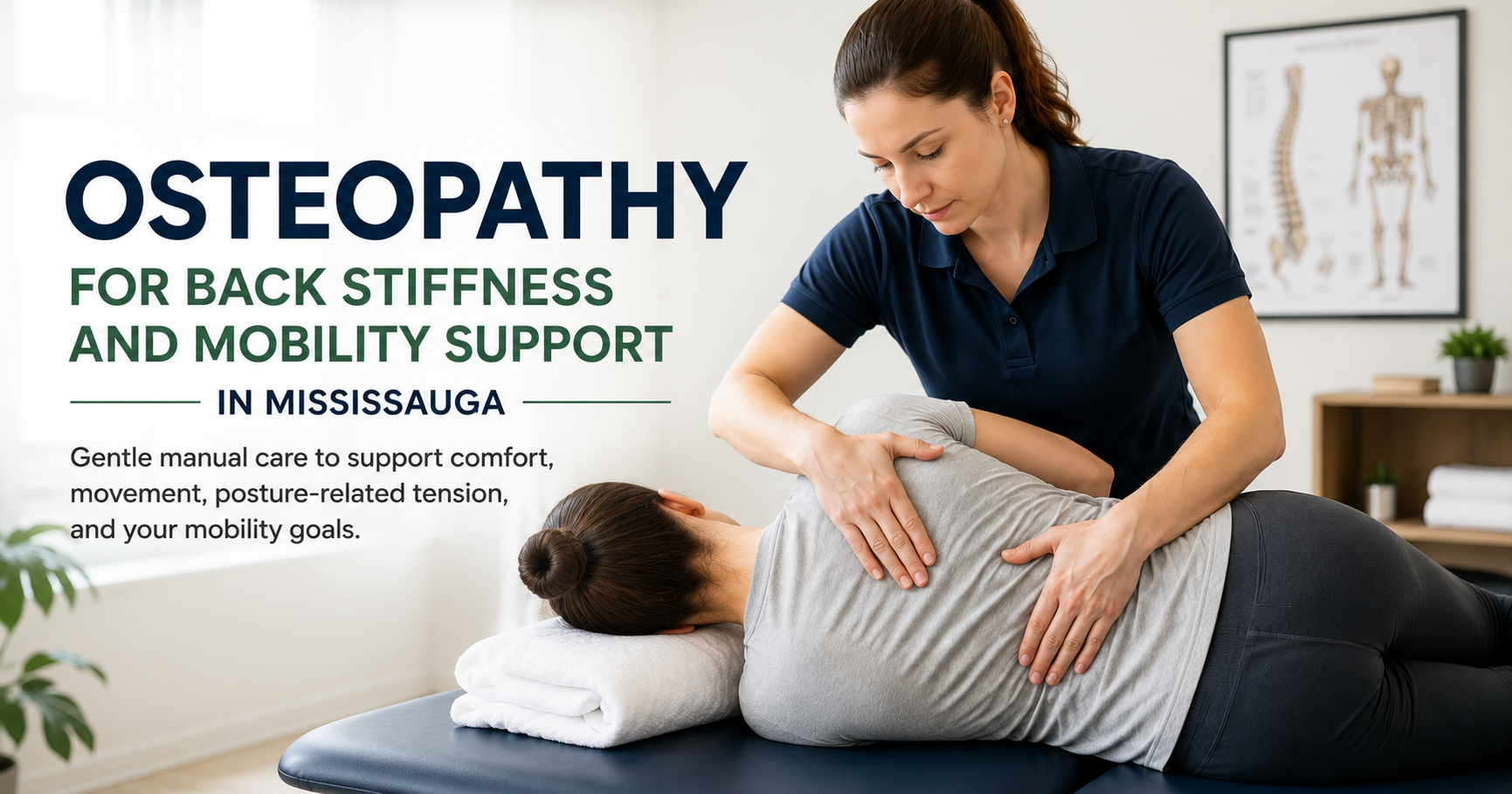
Osteopathy may support back stiffness and mobility goals through gentle manual techniques that consider muscles, joints, connective tissues, posture, breathing patterns, and movement habits. It should not be presented as a cure or spinal alignment correction. Care depends on assessment, comfort level, health history, and whether medical evaluation is needed.
Why Back Stiffness Can Happen
Back stiffness is a feeling of tightness, restriction, or reduced ease of movement. It may be most noticeable after waking, after sitting for a long time, following physical activity, or when bending and rotating.
Several factors may contribute, including:
- Prolonged sitting or standing
- Reduced physical activity
- Repetitive lifting or bending
- An unfamiliar workout or physical task
- Muscle tension related to stress
- Changes in daily routine
- Limited movement variety
- Previous injury
- Joint irritation
- Age-related changes
- Sleep position or an unsuitable workstation
Stiffness does not always mean that something is damaged or out of place. Muscles and joints may feel guarded after unfamiliar activity or prolonged inactivity, and movement can temporarily feel less comfortable when the body has not changed position regularly.
However, stiffness can also occur with injury, arthritis, inflammatory conditions, nerve involvement, or other health concerns. This is why an assessment should consider more than where the stiffness is felt.
A practitioner may ask when symptoms began, which movements feel restricted, whether pain travels into the legs, and whether there are changes in strength, sensation, balance, sleep, or daily function.
How Mobility, Posture, and Daily Habits May Contribute
Posture is often discussed as though there is one perfect position that everyone should maintain. In reality, the body generally benefits from movement variety rather than holding any single position for long periods.
Someone can sit with apparently good posture and still feel stiff after remaining there for several hours. Likewise, a person may experience back tension because their work, commute, hobbies, and evening routines involve similar positions throughout the day.
Daily habits that may contribute to stiffness include:
- Working at a computer without regular movement breaks
- Commuting for long periods
- Repeatedly carrying a bag on one side
- Lifting with limited movement options
- Moving very little during the week and exercising intensely on weekends
- Sleeping in a position that feels uncomfortable
- Avoiding movement because of fear of discomfort
Breathing patterns may also influence how the trunk and rib cage move. During periods of stress, some people breathe more shallowly and hold tension through the shoulders, abdomen, and back. This does not mean breathing is the sole cause of stiffness, but it may be one factor considered during an osteopathic assessment.
Gentle movement, gradual activity, and regular position changes often form part of a sensible mobility plan. For some patients, physiotherapy in Mississauga may be a better fit when progressive strengthening, rehabilitation, or structured mobility exercises are needed.
What Osteopathic Manual Care May Include
Osteopathic manual care is a hands-on approach that considers how muscles, joints, connective tissues, and movement patterns may relate to a patient’s symptoms and goals. The Ontario Association of Osteopathic Manual Practitioners explains that manual osteopathy in Ontario is not regulated by a provincial health college in the same way as professions such as chiropractic, physiotherapy, and registered massage therapy. This makes practitioner training, membership, transparency, and insurance eligibility important for patients to confirm.
An osteopathy appointment usually begins with a detailed conversation. The practitioner may ask about:
- Where stiffness is felt
- When symptoms started
- Which movements feel restricted
- Work and activity habits
- Previous injuries
- Current medical conditions
- Medications
- Sleep and stress patterns
- Goals for care
The physical assessment may include observing comfortable movement, bending, rotation, posture, breathing, and how different areas respond to gentle testing.
Depending on the findings and your comfort level, manual care may involve:
- Gentle joint mobilization
- Soft tissue techniques
- Stretching
- Positional release
- Guided movement
- Work involving the rib cage or breathing mechanics
- Education about daily movement habits
Treatment should be adapted to the individual. It should not be presented as putting bones back into place, correcting a hidden root cause, restoring perfect alignment, or activating a guaranteed self-healing response.
Some patients may experience temporary tenderness or fatigue after manual care, while others may feel more relaxed. Results vary, and the response should be reviewed before deciding whether further sessions are appropriate.
Osteopathy vs Physiotherapy, Chiropractic Care, and Massage Therapy
Several services may be considered for back stiffness, but they do not have identical roles.
| Service | When It May Be Considered |
|---|---|
| Osteopathy | May be considered when a patient wants gentle manual support for stiffness, mobility, posture-related tension, and general movement goals. |
| Physiotherapy | May be more appropriate when progressive exercise, strengthening, rehabilitation, balance, or return-to-activity planning is needed. |
| Chiropractic Care | May be considered when joint movement, spine-related stiffness, musculoskeletal function, or posture-related strain needs assessment. |
| Registered Massage Therapy | May be considered when muscle tension, stress-related physical tension, or soft-tissue discomfort is a major part of the stiffness. |
Osteopathy
Osteopathy may use gentle manual techniques while considering mobility across the back, hips, rib cage, muscles, connective tissues, posture, and breathing patterns. It may be considered when a patient wants manual support for stiffness and general movement goals.
Physiotherapy
Physiotherapy in Mississauga often places greater emphasis on functional assessment, progressive exercise, rehabilitation, strength, balance, and returning to specific activities. It may be particularly relevant after injury, surgery, significant weakness, or when a structured loading program is needed.
Innova’s guide to how physiotherapy supports long-term recovery explains how assessment, movement retraining, strengthening, and ongoing reassessment may fit into rehabilitation.
Chiropractic Care
Chiropractic care in Mississauga may assess joint movement, musculoskeletal function, and related symptoms involving the spine and surrounding areas. Techniques and treatment plans vary by practitioner and should be based on assessment, preferences, and clinical appropriateness.
Registered Massage Therapy
Registered massage therapy in Mississauga primarily focuses on muscles and other soft tissues. It may be considered when muscle tension, stress, or soft-tissue discomfort is a major part of the stiffness.
Choosing between these services depends on your symptoms and goals. Some patients need one discipline, while others may benefit from coordinated care. Innova’s guide to integrated wellness services in Mississauga explains how different practitioners may contribute without assuming that every patient requires multiple services.
When Back Stiffness Needs Medical Assessment
Most everyday stiffness is not an emergency, but some symptoms require timely medical attention rather than manual care alone.
Seek urgent assessment if back stiffness or pain occurs with:
- New loss of bladder or bowel control
- Numbness around the groin or saddle area
- Sudden or increasing weakness in one or both legs
- Difficulty standing or walking
- Severe pain following a fall, collision, or other trauma
- Fever with significant back pain
- Unexplained weight loss
- Chest pain or shortness of breath
- Severe abdominal pain
- Pain that becomes rapidly worse
- Symptoms associated with a known infection or serious medical condition
HealthLink BC’s public guidance on back pain red flags identifies concerns such as loss of bladder or bowel control, sudden leg weakness or numbness, inability to stand or walk, and fever as reasons to seek medical care.
Medical assessment may also be appropriate when stiffness persists for several weeks, repeatedly interrupts sleep, follows a new medication or illness, or is accompanied by ongoing numbness, tingling, weakness, or pain travelling down a leg.
Manual osteopathy should not replace emergency, medical, or diagnostic care when these concerns are present.
What Osteopathy Support Looks Like at Innova
At Innova Integrated Wellness Centre, osteopathy in Mississauga is positioned as a gentle manual care option for appropriate patients with mobility concerns, posture-related tension, and musculoskeletal stiffness.
An osteopathy experience at Innova may include:
- A discussion of your symptoms, medical history, daily activities, and goals
- Screening for red flags or circumstances requiring medical clearance
- Assessment of comfortable back, hip, rib cage, and general movement
- Consideration of muscle tension, joint mobility, breathing, and movement habits
- Manual techniques adapted to your comfort and preferences
- Practical guidance about movement breaks, activity, or self-management
- Referral to another service when a different approach appears more suitable
- Reassessment based on how you respond rather than a predetermined promise
The aim is not to create dependency on repeated treatment or promise permanent relief. The aim is to understand whether osteopathic manual care may offer useful support and to adjust the plan according to the patient’s response.
For example, a patient needing progressive strengthening may be guided toward physiotherapy. Someone whose symptoms are primarily muscular may consider registered massage therapy. A patient who needs assessment of spinal or joint movement may explore chiropractic care. Others may only need education, gradual activity, or medical review.
Patients who are uncertain where to begin can also review Innova’s guide to integrated wellness services in Mississauga before booking.
Supporting Mobility Between Appointments
Manual care is only one part of mobility support. What happens between appointments may be equally important.
Depending on your assessment, helpful strategies may include:
- Changing position regularly during the workday
- Taking brief walking breaks
- Increasing activity gradually
- Using gentle movements recommended by your provider
- Adjusting workstation height or screen position
- Avoiding sudden increases in lifting or exercise
- Pacing demanding household tasks
- Paying attention to sleep and recovery
- Discussing persistent symptoms with a healthcare provider
The goal is not to force a stiff back into uncomfortable positions. Movement should be gradual and appropriate to your current ability.
Staying active is often encouraged for uncomplicated back concerns, but the right amount and type of activity depends on the individual. If movement causes increasing pain, weakness, numbness, or other concerning symptoms, seek professional assessment rather than pushing through.
Book Osteopathy in Mississauga
Back stiffness can make ordinary movements feel more demanding, but the right starting point is not always aggressive treatment or a promise of instant correction. It begins with understanding when the stiffness occurs, how it affects daily life, and whether manual care, rehabilitation, self-management, or medical assessment is most appropriate.
Osteopathy may support comfort and mobility for some patients through gentle, individualized manual care. It does not correct a supposedly misaligned spine, cure every cause of stiffness, or guarantee permanent improvement.
If back stiffness is limiting your movement, work, or daily activities, osteopathy may be worth considering after assessment.
Book an osteopathy appointment online or call (905) 814-9355 to discuss the most suitable starting point for your goals.
Innova Integrated Wellness Centre
49 Queen Street South, Unit 8
Streetsville, Mississauga, Ontario L5M 1K5
Questions about Osteopathy and Back stiffness
Osteopathy may help some patients manage back stiffness by using gentle manual techniques focused on muscles, joints, connective tissues, movement, and breathing patterns. The aim is to support comfort and mobility rather than correct spinal alignment or guarantee recovery. Whether it is appropriate depends on the cause of the stiffness, your health history, assessment findings, and response to care. Persistent, severe, or neurologically associated symptoms may require medical evaluation first.
Back stiffness may develop after prolonged sitting, reduced activity, repetitive work, unfamiliar exercise, stress-related muscle tension, or changes in routine. It can also occur with injury, arthritis, inflammatory conditions, nerve involvement, or other health concerns. The timing and accompanying symptoms matter. Stiffness that improves after gentle movement may have a different pattern from stiffness accompanied by fever, weakness, numbness, trauma, or unexplained weight loss, which should be medically assessed.
An osteopathy appointment generally begins with questions about your symptoms, medical history, activities, previous injuries, and goals. The practitioner may observe movement, posture, breathing, and how different areas respond to gentle assessment. Care may include soft tissue techniques, joint mobilization, stretching, positional work, and guided movement. Treatment should be adapted to your comfort. The practitioner may recommend another service or medical assessment if osteopathy is not the most appropriate starting point.
No. Osteopathy and chiropractic care are separate approaches, although both may include hands-on assessment and manual techniques. Osteopathy may consider relationships among muscles, joints, connective tissues, breathing, posture, and broader movement patterns. Chiropractic care may place greater focus on musculoskeletal and spinal joint function. Methods vary by practitioner. The better option depends on your symptoms, preferences, health history, and assessment rather than one service being universally better.
Yes. Physiotherapy commonly emphasizes rehabilitation, exercise progression, strength, balance, functional movement, and return to activity following injury, surgery, or deconditioning. Osteopathy generally places more emphasis on gentle manual assessment and treatment of mobility across muscles, joints, and connective tissues. There can be some overlap, but the services have different scopes and approaches. A patient needing structured strengthening may benefit more from physiotherapy, while another may consider osteopathic manual support.
Registered massage therapy may help some patients when back stiffness involves muscle tightness, stress, or soft-tissue tension. Treatment may focus on muscles of the back, hips, shoulders, and surrounding areas according to assessment and comfort. Massage therapy does not diagnose every cause of stiffness or replace medical care. If symptoms involve weakness, numbness, trauma, fever, or progressive pain, further assessment is important before assuming that tight muscles are the primary cause.
There is no standard number of osteopathy sessions suitable for everyone. The plan depends on how long stiffness has been present, contributing factors, health history, goals, and response to care. Some patients may only require a short period of support, while others may need reassessment or referral to another discipline. A practitioner should explain the rationale for any recommended plan and review progress rather than promising a fixed number of sessions or guaranteed results.
Osteopathic manual care is often described as gentle and should be adapted to the patient’s comfort and preferences. Some areas may feel tender during assessment or treatment, and temporary soreness can occur afterward, but care should not feel sharply painful or intolerable. Tell the practitioner immediately if a technique feels uncomfortable. Treatment intensity can be adjusted or stopped. New or worsening pain after an appointment should be discussed with the provider and medically assessed when appropriate.
Seek medical attention when back stiffness occurs with loss of bladder or bowel control, groin numbness, sudden leg weakness, difficulty walking, fever, significant trauma, chest pain, severe abdominal pain, or rapidly worsening symptoms. Assessment is also appropriate when stiffness persists, repeatedly disrupts sleep, or occurs with unexplained weight loss, numbness, tingling, or pain travelling down a leg. These symptoms may require investigation before osteopathy or another manual therapy is considered.
Some extended health benefit plans cover osteopathic manual care, but coverage varies by insurer, employer plan, practitioner membership, annual limits, and documentation requirements. Patients should check their policy booklet or contact their insurer before booking. Ask whether osteopathy is included, whether a referral is required, and whether the chosen practitioner meets the plan’s eligibility criteria. Innova’s guide to direct billing for wellness services in Mississauga can help explain how benefit claims may be processed.