Recovery is not simply the point at which pain decreases. For many people, meaningful recovery means being able to walk comfortably, return to work, lift safely, participate in sport or manage daily activities with greater confidence.
An injury, operation, neurological condition or prolonged period of pain can affect strength, mobility, balance, endurance and trust in movement. Even after the initial symptoms improve, a person may still avoid certain activities or struggle to regain their previous level of function.
Physiotherapy provides a structured rehabilitation process based on individual assessment, measurable goals, progressive activity and regular reassessment. For people seeking physiotherapy in Mississauga, treatment may include education, therapeutic exercise, manual techniques, functional retraining and practical guidance for returning to everyday life.
How does physiotherapy support long-term recovery?
Physiotherapy supports long-term recovery by assessing how an injury or health condition affects movement and function, then creating a progressive rehabilitation plan. Care may include education, mobility and strengthening exercises, manual therapy, balance training and activity guidance. Progress is reassessed so treatment can be adapted to the patient’s goals and response.
What Does Long-Term Recovery Mean?
Long-term recovery does not necessarily mean that a person will never experience discomfort again. It means working toward sustainable improvements in function, independence and participation.
Depending on the person, recovery goals may include:
- Walking or climbing stairs more comfortably
- Returning to work after an injury
- Resuming recreational exercise or competitive sport
- Regaining mobility after surgery
- Improving balance and reducing fear of falling
- Increasing tolerance for sitting, standing or lifting
- Managing a persistent condition more confidently
- Completing household and caregiving tasks
- Developing a plan for responding to future flare-ups
The World Health Organization defines rehabilitation as interventions designed to improve functioning and reduce disability in people living with health conditions. This broader definition is important because rehabilitation is not limited to removing pain. It aims to help the person participate more fully in activities that matter to them.
Why Recovery Is Not Always a Straight Line
People often expect recovery to progress consistently from pain to complete relief. In reality, rehabilitation may involve periods of improvement, temporary plateaus and occasional symptom flare-ups.
A flare-up does not automatically mean that new damage has occurred or that the entire rehabilitation plan has failed. Symptoms may temporarily increase after:
- A change in exercise intensity
- Returning to a demanding work task
- Poor sleep
- Increased stress
- Prolonged travel or sitting
- A sudden increase in walking or training
- Introducing an unfamiliar movement
A physiotherapist can help determine whether the response is within an expected range or whether the programme needs to be modified. The aim is to balance sufficient activity to build capacity with enough recovery to avoid repeated overload.
Physiotherapy Begins With an Individual Assessment
Long-term rehabilitation should not begin with a generic list of exercises. The physiotherapist first needs to understand the patient’s symptoms, health history, current abilities and goals.
The initial conversation may cover:
- How and when the problem began
- Previous injuries, operations or treatment
- Current pain and other symptoms
- Medications and relevant health conditions
- Work and household demands
- Exercise and recreational activities
- Activities the person currently avoids
- Personal goals and concerns about recovery
The physical assessment may examine joint movement, strength, balance, walking, coordination, endurance, functional tasks and neurological signs when clinically appropriate.
The College of Physiotherapists of Ontario requires physiotherapists to use appropriate assessment, diagnosis and treatment processes to provide safe, patient-centred care. The treatment plan should be connected to the assessment findings rather than applied as the same protocol to every patient.
Setting Functional and Measurable Goals
Pain ratings can provide useful information, but they do not tell the whole story. A person may still report some discomfort while becoming substantially more active and independent.
Physiotherapy goals should therefore reflect function. Examples include:
- Walking for 30 minutes
- Lifting a work-related load
- Turning the head comfortably while driving
- Getting up from the floor
- Climbing a flight of stairs
- Returning to a recreational sport
- Completing a workday with fewer interruptions
- Improving balance during everyday activities
Clear goals help the physiotherapist select relevant treatments and measure whether the plan is working. They also allow patients to see progress that may not be captured by pain levels alone.
The Main Stages of Physiotherapy Rehabilitation
The details vary according to the condition, but long-term rehabilitation commonly includes several connected stages.
1. Understanding the Problem and Establishing a Baseline
The physiotherapist assesses current function and explains the findings in understandable language. This may include discussing which movements are limited, which activities trigger symptoms and which abilities need to be rebuilt.
The explanation should avoid frightening or overly structural language. Not every painful movement means that a tissue is damaged, and not every limitation comes from one identifiable “root cause.”
A baseline may include range of motion, walking tolerance, strength, balance, functional tests or validated questionnaires. These measures can later be repeated to assess progress.
2. Managing Symptoms While Maintaining Movement
Early rehabilitation may focus on finding tolerable ways to move and participate in daily life. Complete rest is not always required, although temporary activity modification may be appropriate.
The physiotherapist may recommend:
- Comfortable mobility exercises
- Short periods of walking
- Changes to an aggravating task
- Position variation
- Pacing strategies
- Heat or cold for temporary comfort
- Manual therapy when clinically appropriate
- Education about expected symptom responses
The objective is not simply to suppress every sensation. It is to help the patient continue or gradually resume safe and meaningful activity.
3. Restoring Mobility and Movement Confidence
Pain or injury can lead people to protect an area and avoid movement. This may be useful temporarily, but prolonged avoidance can reduce mobility and confidence.
A physiotherapist may use graded movement to help the patient regain comfortable range of motion. Manual therapy may also be used to support short-term movement or symptom tolerance, but it should not be described as permanently realigning the body or breaking down all scar tissue.
Where manual therapy is used, it normally works best as one part of a wider programme that includes active rehabilitation and self-management.
4. Rebuilding Strength and Physical Capacity
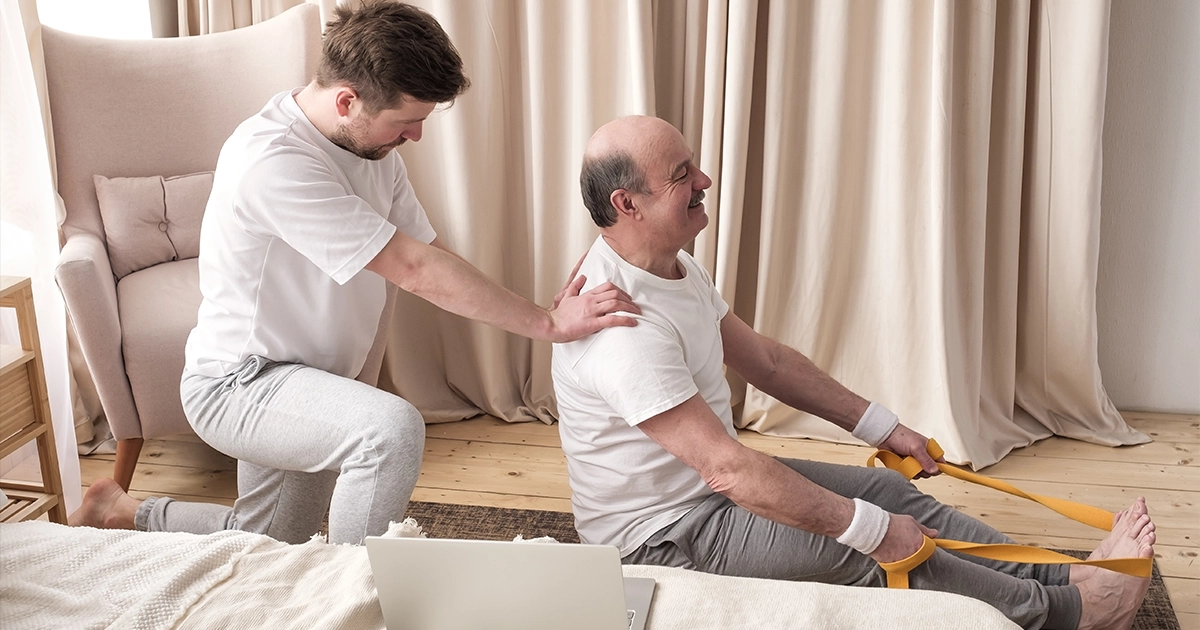
Therapeutic exercise is a central part of many physiotherapy plans. Exercises are selected according to what the person needs to do rather than according to a universal rehabilitation routine.
A programme may address:
- Muscle strength
- Joint mobility
- Cardiovascular endurance
- Balance
- Coordination
- Walking tolerance
- Lifting ability
- Speed or agility
- Work-specific capacity
- Sport-specific movements
Exercises should be progressed gradually. As the patient adapts, resistance, repetitions, movement range, duration or task complexity may increase.
The purpose is not to create a “perfect” body. It is to develop enough capacity for the demands of the person’s work, recreation and daily activities.
Load Management and Gradual Progression
Load refers to the physical demand placed on the body through exercise, work, sport and everyday movement. Too little activity may slow the rebuilding of strength and confidence, while a sudden increase may aggravate symptoms.
A physiotherapist may help the patient answer practical questions such as:
- How much walking should I begin with?
- When can I increase the exercise resistance?
- Can I return to lifting at work?
- How quickly should I resume running?
- Is soreness after exercise expected?
- When should an exercise be modified?
- Which symptoms require reassessment?
Load management does not guarantee that reinjury will never occur. It provides a structured way to increase demands while monitoring the person’s response.
Education and Self-Management
Long-term recovery depends partly on what happens outside the clinic. Education can help patients understand their condition, make informed activity decisions and respond more calmly to temporary symptom changes.
Self-management guidance may include:
- Completing a realistic home programme
- Spreading demanding activities throughout the day
- Taking movement breaks
- Gradually rebuilding activity after a flare-up
- Maintaining general physical activity
- Adjusting exercise volume
- Supporting sleep and recovery
- Recognizing warning signs
- Knowing when to request reassessment
A helpful physiotherapy plan should gradually increase the patient’s independence. It should not create the impression that progress can only continue through indefinite passive treatment.
How Physiotherapy Supports Different Types of Recovery
Musculoskeletal injuries
Physiotherapy may support recovery from sprains, strains, fractures, tendon concerns and other muscle or joint injuries. Rehabilitation can focus on mobility, strength, balance and returning to the activities affected by the injury.
Back and neck pain
For spinal pain, treatment may include education, graded exercise, movement guidance and manual therapy when appropriate. Innova’s guide to physiotherapy for back pain explains condition-specific assessment, treatment and home-care considerations.
Post-surgical rehabilitation
After an operation, rehabilitation may help restore movement, strength and function according to the surgeon’s precautions and the patient’s healing stage. The plan depends on the procedure, medical guidance and individual progress.
Neurological rehabilitation
People living with neurological conditions may work on balance, walking, coordination, transfers and everyday independence. Goals and expected outcomes vary according to the diagnosis and individual presentation.
Return to sport
Sports rehabilitation may progress from basic movement and strength to running, jumping, change of direction or sport-specific tasks. Returning only because pain has decreased may not be enough; the athlete may also need sufficient capacity and confidence for the demands of the sport.
Measuring Whether Physiotherapy Is Working
Reassessment is an essential part of responsible physiotherapy. Progress may be measured through:
- Changes in symptoms
- Improved joint movement
- Increased strength
- Better balance
- Greater walking or exercise tolerance
- Return to work or sport
- Improved confidence with movement
- Reduced interruption to daily activities
- Greater independence with self-management
Ontario physiotherapy standards expect practitioners to assess and reassess a patient’s condition and progress using appropriate measures.
The plan should be reviewed when progress is slower than expected, symptoms substantially worsen or new concerns develop. Options may include changing the exercise dosage, modifying the treatment approach or referring to another healthcare provider.
When Physiotherapy May Need to Be Coordinated With Other Care
Some patients benefit from support from more than one regulated healthcare provider. This may be relevant when recovery involves complex medical, physical or psychosocial factors.
Depending on the assessment, physiotherapy may be coordinated with:
- Medical care
- Occupational therapy
- Chiropractic care
- Registered massage therapy
- Acupuncture
- Psychotherapy
- Nutrition counselling
- Specialist rehabilitation
At Innova, physiotherapy can be coordinated with other clinic services when clinically relevant. However, combining treatments does not automatically guarantee better or faster results. Recommendations should be based on the patient’s needs and goals.
Patients comparing physical rehabilitation and chiropractic care can read Innova’s guide to physiotherapy versus chiropractic care.
When to Seek Physiotherapy
A physiotherapy assessment may be useful when:
- Pain or stiffness is limiting normal activity
- You are recovering from an injury or operation
- The same problem keeps returning
- Balance or walking has changed
- You are having difficulty returning to work or exercise
- Strength or mobility has declined
- You need guidance progressing activity safely
- A health condition is affecting physical function
Seek urgent medical care for sudden or rapidly worsening weakness, loss of bladder or bowel control, numbness around the groin, severe symptoms after major trauma, chest pain, difficulty breathing or sudden neurological changes. Physiotherapy should not delay emergency assessment.
Physiotherapy at Innova Integrated Wellness Centre
At Innova, physiotherapy begins with an individualized review of symptoms, health history, movement, function and goals. Treatment may include exercise, manual therapy, movement retraining, education and home recommendations based on the assessment.
Care is provided by Asmita Sangave, a registered physiotherapist whose Innova profile describes experience across orthopaedic, neurological, vestibular and pelvic-health rehabilitation.
Progress is monitored so the plan can be adapted as the patient’s mobility, strength and functional tolerance change. Physiotherapy coverage and direct-billing eligibility depend on the patient’s individual extended health plan. Innova provides physiotherapy services from its Streetsville, Mississauga clinic.
Frequently Asked Questions
Recovery time varies according to the condition, how long symptoms have been present, overall health, treatment goals and activity demands. A minor recent injury may follow a different timeline from post-surgical or neurological rehabilitation. Your physiotherapist should explain the initial plan and update it according to your measured progress.
No. Physiotherapy cannot guarantee that pain or injury will never recur. It may help improve strength, mobility, physical capacity, movement confidence and self-management. Future symptoms can still be influenced by changes in workload, health, sleep, stress, activity or a new injury.
Exercise is commonly used because it can support mobility, strength, endurance, balance and functional recovery. However, the type and amount depend on the patient’s assessment and goals. A programme may begin with gentle movement and progress toward work, sport or daily activities.
No. Manual therapy is only one possible part of physiotherapy. Treatment may mainly involve education, exercise, balance training, movement retraining, activity progression or home guidance. When manual techniques are used, they should support the broader rehabilitation plan rather than replace active care.
A temporary flare-up does not always mean that new damage has occurred. Tell your physiotherapist so they can review the symptoms, recent activities and exercise dosage. The programme may need to be temporarily modified. Sudden neurological symptoms, major weakness or other warning signs require prompt medical assessment.
Progress may be measured through pain and symptom changes, range of motion, strength, balance, walking tolerance, functional tests and the ability to resume meaningful activities. Reassessment helps determine whether the programme should progress, continue, change or involve referral.
A medical referral is generally not required to book physiotherapy in Ontario. However, some extended health-benefit plans require a referral before reimbursing treatment. Check your policy or contact your insurer before booking when coverage is an important consideration.
Begin Your Physiotherapy Recovery in Mississauga
Long-term recovery is about more than reducing symptoms. It involves rebuilding movement, capacity and confidence so you can return to the activities that matter to you.
Book a physiotherapy assessment at Innova Integrated Wellness Centre or call (905) 814-9355.
Innova Integrated Wellness Centre
49 Queen Street South, Unit 8
Streetsville, Mississauga, Ontario L5M 1K5