Physiotherapy may begin in hospital soon after some operations, while outpatient rehabilitation may start days or weeks later. There is no single start date that applies to every surgery.
Timing depends on the procedure, tissue healing, surgeon instructions, weight-bearing or movement restrictions, wound status and your overall health.
Early rehabilitation may include safe movement, walking guidance, education and permitted exercises. More demanding strengthening or loading may need to wait until the surgical team allows it.
At Innova Integrated Wellness Centre, post-surgical physiotherapy is assessment-based and adapted to the procedure, restrictions, current function and recovery goals.
What Is Post-Surgical Physiotherapy?
Post-surgical physiotherapy helps patients recover movement and physical function after an operation when rehabilitation is appropriate.
Depending on the procedure and stage of healing, care may address:
- stiffness or reduced range of motion
- muscle weakness
- difficulty walking
- reduced balance
- use of crutches, a walker or another mobility aid
- difficulty with stairs or daily tasks
- gradual return to work, exercise or recreation
A rehabilitation plan may include education, permitted mobility exercises, progressive strengthening, gait or balance work, functional training and a home programme.
Rehabilitation should work within surgical precautions, not override them.
Why Does Rehabilitation Timing Differ Between Surgeries?
Different operations create different healing and loading requirements.
A joint replacement, tendon repair, fracture fixation and ligament reconstruction cannot be progressed in the same way. Even patients with the same named operation may receive different instructions because of surgical findings or additional procedures.
University Health Network notes that suitable movement and walking may begin very early after some surgeries under the guidance of the hospital team. However, the timing and type of exercise depend on the operation and medical history.
Some Procedures Encourage Early Movement
After selected operations, patients may begin supported walking, transfers or basic exercises in hospital.
For example, joint-replacement pathways often introduce movement early, with assistance until it is safe to progress.
Some Repairs Need Protection
Tendon, ligament or fracture repairs may restrict certain movements, loads or positions while tissue heals.
Starting physiotherapy does not necessarily mean actively stretching, strengthening or loading the operated area immediately.
Which Surgical Precautions Should Your Physiotherapist Know?
Bring your discharge instructions and rehabilitation protocol to your first appointment.
Important details may include:
- weight-bearing status
- movement or range-of-motion restrictions
- whether movement should be passive, assisted or active
- lifting or resistance limits
- use of a sling, brace, boot or walking aid
- wound-care instructions
- restrictions on driving, work or exercise
- timing of surgical follow-up
Less pain does not mean a repair is ready for unrestricted loading.
If instructions are missing, unclear or conflicting, the appropriate next step may be clarification with the surgical team before progressing a restricted activity.
What Happens at the First Post-Surgical Physiotherapy Appointment?
The first visit should establish where you are in recovery and what is currently safe to assess or progress.
Bring:
- discharge paperwork
- procedure details
- surgical precautions
- rehabilitation protocol
- medication information
- existing home exercises
- relevant imaging or follow-up reports
Your physiotherapist may ask about pain, swelling, wound concerns, mobility, sleep, daily tasks, work demands and your recovery goals.
Assessment may include permitted movement, strength, walking, balance or functional tasks.
The College of Physiotherapists of Ontario’s Assessment, Diagnosis and Treatment Standard requires physiotherapy to be based on appropriate assessment, clinical reasoning, monitoring and referral where needed.
Testing should respect surgical precautions rather than push you to demonstrate your maximum ability.
How Does Physiotherapy Restore Mobility?
Mobility work depends on what the surgery allows.
Early goals may include:
- getting in and out of a chair safely
- moving the operated joint within an allowed range
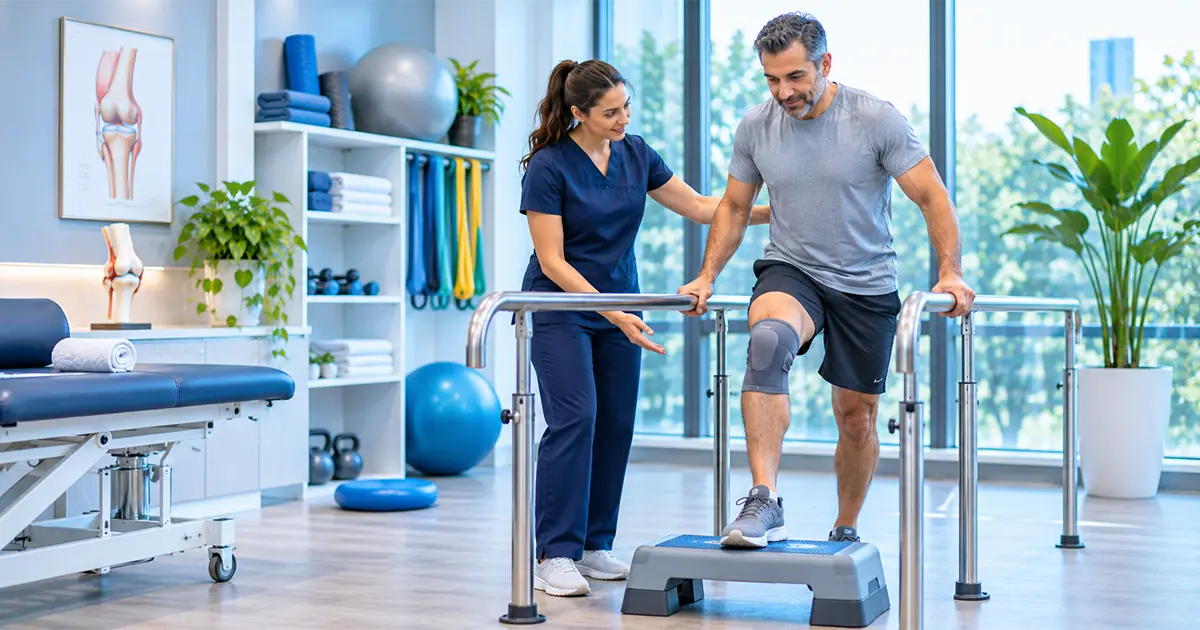
- improving walking with an appropriate aid
- practising stairs
- gradually increasing useful movement
For some patients, restoring movement is a priority. For others, protecting a repair is more important during the early stage.
Do not copy another patient’s post-surgical exercise programme simply because the operation sounds similar. Surgical findings, tissue quality and restrictions can differ.
When Does Strengthening Begin?
Strengthening begins when the procedure, healing stage and surgeon’s instructions permit it.
Early rehabilitation may involve low-load muscle activation. Later stages can introduce greater resistance and functional tasks.
Progression should consider:
- whether loading is allowed
- quality of movement
- symptom response during and after exercise
- swelling or other changes
- functional goals
- whether surgical review is required first
A temporary reduction in pain is not evidence that the operated tissue is ready for unrestricted strengthening.
What Can Gait and Functional Rehabilitation Include?
After lower-limb surgery, physiotherapy may include:
- safe use of crutches, a walker or cane
- chair and bed transfers
- stairs
- balance
- walking progression
- gradual return to everyday tasks
Upper-limb rehabilitation may instead focus on dressing, permitted reaching, hand use and household activities.
Functional rehabilitation should connect clinic exercises with what you actually need to do at home, work or in recreation.
When Can You Return to Work, Driving or Exercise?
Return depends on the surgery, medical restrictions and physical demands of the activity.
Desk work differs from a job involving lifting, prolonged standing or overhead work. Similarly, a short walk does not establish readiness for running, sport or a full work shift.
Discuss:
- which tasks are currently permitted
- whether modified duties are appropriate
- what needs to improve before progression
- whether medical clearance is required
- how readiness will be assessed
Driving also requires adequate control, movement and alertness. Follow your surgical team’s advice, particularly if you are using mobility aids or medication that may impair driving.
When Should You Contact Your Surgeon or Seek Medical Care?
Physiotherapy should not delay assessment of a possible surgical complication.
Seek emergency medical attention for chest pain, sudden shortness of breath, collapse or another medical emergency.
Contact your surgical team or seek prompt medical advice for concerns such as:
- new calf pain, swelling, warmth or redness
- increasing wound redness, drainage or opening
- fever or chills with wound changes
- severe or unexpectedly worsening pain
- sudden loss of movement or function
- new numbness or weakness
- symptoms that differ substantially from the expected recovery pattern
Do not massage or exercise a painful swollen calf while waiting to determine whether a blood clot may be present.
How Many Physiotherapy Visits Will You Need?
There is no standard number of appointments for every surgery.
Frequency should depend on the rehabilitation protocol, current limitations, progress, ability to manage exercises independently and need for reassessment.
Useful review points may include:
- improving an allowed movement
- walking more confidently
- using stairs more safely
- completing an essential daily task
- progressing strength
- preparing for return to work or activity
If progress is not occurring as expected, the plan should be reassessed rather than automatically continued unchanged.
For appointment and coverage information, see Innova’s physiotherapy cost, insurance and direct-billing guide.
Post-Surgical Physiotherapy at Innova in Mississauga
Innova provides physiotherapy at 49 Queen Street South, Unit 8, Streetsville, Mississauga.
Aparna Vaspate, Registered Physiotherapist, MScPT, has more than 15 years of experience in hospital and private-clinic settings. She also works as an Advanced Practice Physiotherapist in a Rapid Access Clinic focused on hip and knee osteoarthritis, where her role includes advanced assessment and triage.
Her experience with hip and knee assessment, strengthening, mobility and functional rehabilitation can be particularly relevant when patients are recovering from orthopaedic procedures involving those areas. The appropriate practitioner and rehabilitation plan should still be confirmed for the specific surgery.
Patients with hip or knee concerns may also find Innova’s physiotherapy guide for hip and knee osteoarthritis useful for related mobility and strengthening information.
Explore physiotherapy at Innova or book through Innova’s online appointment portal.
Frequently Asked Questions
It may begin in hospital or later as outpatient care. Timing depends on the procedure, healing stage and surgical instructions.
Not always. Suitable rehabilitation may occur while some discomfort remains. Your physiotherapist should explain acceptable responses and warning signs.
Bring your discharge instructions, procedure details, rehabilitation protocol, medication list, existing exercises and relevant follow-up information.
Not without checking suitability. Similar operations can have different precautions and progression timelines.
Contact your surgical team promptly, especially if there are wound changes, fever, calf symptoms, neurological changes or sudden loss of function. Chest pain or sudden breathing difficulty requires emergency medical attention.