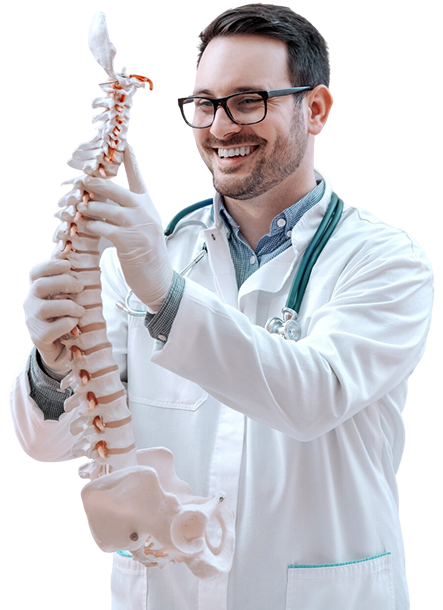

Desk work can seem physically easy, but long hours of sitting, screen use, keyboard work, phone use, and limited movement can place repeated stress on the neck, shoulders, upper back, lower back, and hips.
For many people, desk-related discomfort starts gradually. A stiff neck at the end of the day becomes recurring shoulder tension. A sore lower back after long meetings becomes daily tightness. Headaches, posture strain, and reduced mobility may also begin to show up when the body is spending too much time in the same position.
At Innova Integrated Wellness Centre, chiropractic care in Mississauga may help assess and support desk-related back pain, neck pain, stiffness, posture strain, joint discomfort, and movement concerns. Care is personalized based on your symptoms, work habits, health history, comfort level, and assessment findings.
Can Chiropractic Care Help Desk Job Back and Neck Pain?
Chiropractic care may support desk job back and neck pain by assessing spine, joint, muscle, posture, and movement-related factors that may contribute to discomfort. Treatment may include chiropractic adjustments, gentle mobilization, soft tissue therapy, posture guidance, ergonomic education, and exercises. Results vary, and medical assessment may be needed for severe or persistent symptoms.
Why Desk Jobs Can Lead to Back and Neck Pain
Desk jobs often involve long periods of sitting, repetitive hand movements, forward head posture, rounded shoulders, laptop use, and reduced movement breaks. None of these automatically means someone will develop pain, but they can contribute to discomfort when the body is not getting enough position changes, support, or movement variety.
Common desk-related factors include:
- Sitting for long periods without movement breaks
- Working with the screen too low or off to one side
- Using a laptop without an external keyboard or mouse
- Leaning forward toward the monitor
- Sitting without enough lower-back support
- Holding tension in the shoulders while typing
- Reaching for the mouse or keyboard repeatedly
- Working from a couch, bed, dining table, or non-adjustable chair
- Stress-related muscle tension
- Poor workstation fit for your body size and work tasks
The Canadian Centre for Occupational Health and Safety notes that office ergonomics should consider the full workstation, including chair, desk, monitor, keyboard, mouse, posture, pace, and work breaks. This matters because neck, shoulder, back, wrist, and eye discomfort can develop when the workstation and work habits do not fit the person using them.
For Mississauga patients who work in offices, hybrid setups, remote work environments, or long computer-based roles, the problem is often not one single posture. It is usually the combination of repeated positions, low movement variety, stress, workload, and workstation setup.
Common Signs of Desk-Related Back and Neck Strain
Desk-related pain can feel different from person to person. Some people feel sharp discomfort after a long day. Others feel dull stiffness, tightness, heaviness, or reduced mobility.
Common symptoms may include:
- Neck stiffness after computer work
- Upper back tightness
- Shoulder tension
- Lower back discomfort from sitting
- Headaches related to neck or shoulder tension
- Pain when turning the head
- Stiffness after meetings or long drives
- Discomfort between the shoulder blades
- Hip tightness after sitting
- Reduced movement or flexibility
- Symptoms that improve when standing or walking
- Symptoms that return after long periods at the desk
These symptoms can come from many possible causes. That is why assessment matters. Chiropractic care should not assume every desk-related concern comes from the same source.
Practical Ways to Reduce Desk-Related Strain
Small changes during the workday can help reduce the amount of time your neck and back spend in one position.
Consider:
- Changing position regularly rather than trying to maintain one “perfect” posture
- Standing or walking briefly during longer periods of desk work
- Positioning your main monitor close to eye level
- Keeping the keyboard and mouse within comfortable reach
- Using lower-back support when it improves comfort
- Alternating between sitting and standing if you use a sit-stand desk
- Including gentle neck, upper-back, hip, and shoulder movement throughout the day
The goal is not to hold your body in one ideal position for hours. Regular movement and a workstation that fits your body can help reduce repeated strain.
If discomfort continues despite changes to your workstation and movement habits, a chiropractic assessment can help determine whether joint mobility, muscle tension, or other musculoskeletal factors may be contributing.
How a Chiropractor Assesses Desk Job Pain
A chiropractor may assess desk-related back or neck pain by reviewing your symptoms, work routine, posture habits, movement patterns, joint mobility, muscle tension, health history, and daily activities.
At Innova’s chiropractic clinic in Mississauga, assessment may include:
- A conversation about when symptoms started
- Review of desk setup and work habits
- Range-of-motion testing
- Posture and movement observation
- Spine and joint mobility assessment
- Muscle and soft-tissue assessment
- Review of headaches, arm symptoms, or nerve-related signs
- Discussion of sleep, stress, activity, and exercise
- Screening for symptoms that may need medical referral
A chiropractor may also ask about your home office setup, laptop use, standing desk habits, chair support, screen height, phone use, commute time, and how often you take breaks.
The goal is not simply to identify “bad posture.” The goal is to understand what may be contributing to repeated strain and what can be changed safely.
What Chiropractic Care May Include
Chiropractic care for desk job back and neck pain may include different treatment approaches depending on your assessment and comfort level.
Your care may include:
Chiropractic Adjustments
Chiropractic adjustments may be used to support joint mobility and movement comfort where appropriate. Adjustments should always be based on assessment, consent, and patient comfort.
Gentle Mobilization
Some patients prefer lower-force care. Gentle mobilization may be used to support movement in areas of stiffness without a stronger adjustment approach.
Soft Tissue Therapy
Soft tissue techniques may be used for muscle tension in the neck, shoulders, upper back, lower back, or hips.
Posture and Movement Education
Your chiropractor may help you understand how your desk setup, screen height, chair position, and movement habits may be contributing to discomfort.
Ergonomic Guidance
Ergonomic guidance may include practical changes to your chair, monitor, keyboard, mouse, laptop setup, or break routine.
Home Exercises
Your chiropractor may recommend simple exercises to support mobility, strength, posture awareness, or movement tolerance between visits.
Referral or Integrated Care
If your concern may benefit from another service, your chiropractor may recommend physiotherapy, registered massage therapy, acupuncture, or medical assessment when appropriate.
Desk Job Pain: Chiropractic Care vs Massage Therapy vs Physiotherapy
Many patients are not sure which service to book first. The right starting point depends on your symptoms, goals, and assessment needs.
| Concern or Goal | Chiropractic Care May Fit When | Massage Therapy May Fit When | Physiotherapy May Fit When |
| Neck stiffness | Joint mobility, movement limits, posture strain, or recurring stiffness may need assessment | Muscle tension or stress-related tightness is the main concern | Strength, movement control, or rehab planning is needed |
| Upper back tension | Spine, rib, shoulder, or posture-related factors may be contributing | Soft-tissue tension is the main concern | Exercise-based correction or return-to-activity support is needed |
| Lower back pain from sitting | Joint, movement, posture, or work-habit factors need assessment | Muscle tightness or general soreness is the main issue | Persistent pain, weakness, or functional limitation needs rehab |
| Headaches with neck tension | Neck mobility, joint irritation, or posture strain may be involved | Shoulder and neck muscle tension is a major trigger | Strength, movement retraining, or symptom management is needed |
| Recurring symptoms | A broader assessment may help identify repeated triggers | Supportive soft-tissue care may help comfort | A progressive strengthening or mobility plan may be needed |
Some patients benefit from one service. Others may benefit from coordinated care. Innova’s integrated clinic setting allows patients to explore more than one care option when appropriate.
Ergonomic Changes That May Help Desk-Related Discomfort
Ergonomic changes should be practical. You do not always need a perfect office setup, but small adjustments can reduce repeated strain.
Consider reviewing:
Monitor Height and Position
Your monitor should be positioned so you are not constantly looking down, twisting your neck, or leaning forward. CCOHS notes that monitor position can contribute to neck and shoulder discomfort when it forces awkward working positions.
Chair Support
Your chair should fit your body and your workstation. A chair is only ergonomic if it supports the worker, the work surface, and the task being performed.
Keyboard and Mouse Position
Your keyboard and mouse should allow your shoulders to stay relaxed and your elbows to remain close to your body. Reaching forward or sideways for long periods can increase shoulder and upper-back strain.
Movement Breaks
Movement breaks matter because the body is not designed to stay still for hours. Try changing position, standing, walking, or doing gentle mobility movements throughout the day.
Laptop Setup
Laptop work often places the screen too low and the keyboard too high or too close. If possible, use a laptop stand with an external keyboard and mouse.
Phone Habits
Avoid holding your phone between your ear and shoulder. Use speakerphone or headphones when possible.
Small setup changes are not a replacement for assessment, but they can support your treatment plan and reduce repeated irritation.
When Desk Job Pain Should Be Checked Medically
Most desk-related discomfort is not an emergency, but some symptoms should be assessed by a medical provider.
Seek medical care urgently if you experience:
- Sudden severe pain after injury or trauma
- Pain with chest pressure, shortness of breath, or dizziness
- New weakness in the arm or leg
- Numbness that is worsening or spreading
- Loss of bladder or bowel control
- Fever with back or neck pain
- Unexplained weight loss
- Severe headache unlike your usual headaches
- Pain that does not improve or continues worsening
- Symptoms after a fall or accident
Chiropractic care should not replace medical assessment when symptoms may require urgent or specialized care.
How Innova Supports Desk Workers in Mississauga
At Innova Integrated Wellness Centre, chiropractic care is part of a broader wellness clinic setting. Patients with desk-related back pain, neck pain, headaches, posture strain, or recurring stiffness can receive assessment-based care from Dr. Lisa Ramsackal, Chiropractor and Registered Acupuncturist.
Depending on your needs, your care plan may also connect with:
- Physiotherapy for strengthening, mobility, injury recovery, and movement retraining
- Registered Massage Therapy for muscle tension and soft-tissue discomfort
- Acupuncture for pain, stress, sleep, tension, and broader wellness support
- Integrated Wellness Services when multiple concerns are connected
This integrated approach can be helpful when desk-related discomfort is not only physical. Stress, poor sleep, reduced movement, long commutes, and workload pressure can all affect how the body feels.
Chiropractic Care in Ontario
Chiropractors in Ontario are regulated by the College of Chiropractors of Ontario. Patients can also use the College’s public information to understand the role of chiropractors and confirm registration.
In Ontario, chiropractic care may include assessment, diagnosis within scope, chiropractic adjustments or manipulation, adjunctive therapies, lifestyle advice, and recommendations related to assistive devices where appropriate.
Patients should feel comfortable asking about credentials, treatment options, risks, consent, expected timelines, and whether another provider should be involved.
Book Chiropractic Care for Desk Job Pain in Mississauga
If desk work is contributing to back pain, neck stiffness, shoulder tension, headaches, or posture-related discomfort, chiropractic care may be a useful starting point.
At Innova Integrated Wellness Centre in Streetsville, Mississauga, care begins with an assessment and a conversation about your symptoms, work routine, goals, and comfort level.
Book a chiropractic appointment online or call (905) 814-9355.
Innova Integrated Wellness Centre
49 Queen Street South, Unit 8
Streetsville, Mississauga, Ontario L5M 1K5
Frequently Asked Questions
Chiropractic care may support desk job back and neck pain by assessing spine, joint, muscle, posture, and movement-related factors that may contribute to discomfort. Treatment may include adjustments, mobilization, soft tissue therapy, ergonomic guidance, and home exercises. Results vary, and medical assessment may be needed for severe or persistent symptoms.
Neck pain after desk work may be related to screen height, forward head posture, shoulder tension, laptop use, stress, reduced movement, or repeated awkward positions. A chiropractor can assess movement, joint mobility, muscle tension, and work habits to understand what may be contributing to your symptoms.
Long periods of sitting may contribute to lower back discomfort, especially if your chair, desk height, posture, or movement breaks are not supporting your body. Sitting itself is not always the only cause, so assessment can help identify whether joint stiffness, muscle tension, hip tightness, or work habits are involved.
Chiropractic care may support posture-related strain by assessing mobility, muscle tension, daily habits, workstation setup, and movement patterns. It should not be described as permanently correcting posture. The goal is to support comfort, movement awareness, and better daily habits where appropriate.
It depends on your symptoms. Chiropractic care may fit when joint mobility, spine-related stiffness, or posture strain needs assessment. Physiotherapy may fit when strength, rehab, or movement retraining is needed. Registered massage therapy may fit when muscle tension and soft-tissue discomfort are the main concerns. Some patients benefit from more than one service.
Some headaches may be related to neck tension, posture strain, stress, or shoulder tightness. Chiropractic care may support assessment and management when neck or musculoskeletal factors are involved. New, severe, unusual, or worsening headaches should be medically assessed.
Helpful changes may include adjusting monitor height, keeping the screen in front of you, using a chair that fits your body, keeping the keyboard and mouse close, taking movement breaks, and avoiding long laptop sessions without support. Your chiropractor may suggest practical changes based on your workstation and symptoms.
Break frequency depends on your work demands and symptoms, but regular movement breaks are generally helpful. Even brief standing, walking, stretching, or changing position can reduce time spent in one posture. Your practitioner may suggest a break routine based on your symptoms and daily schedule.
In many cases, patients can book chiropractic care directly. Some extended health insurance plans may have their own referral or documentation rules, so it is helpful to check your plan. Innova can provide receipts for eligible services and direct billing may be available depending on the service and insurance plan.
Back or neck pain should be medically assessed if it is severe, worsening, linked to trauma, or accompanied by symptoms such as numbness, weakness, fever, chest pain, unexplained weight loss, severe headache, or bladder or bowel changes. Chiropractic care should not replace urgent medical evaluation when red flags are present.