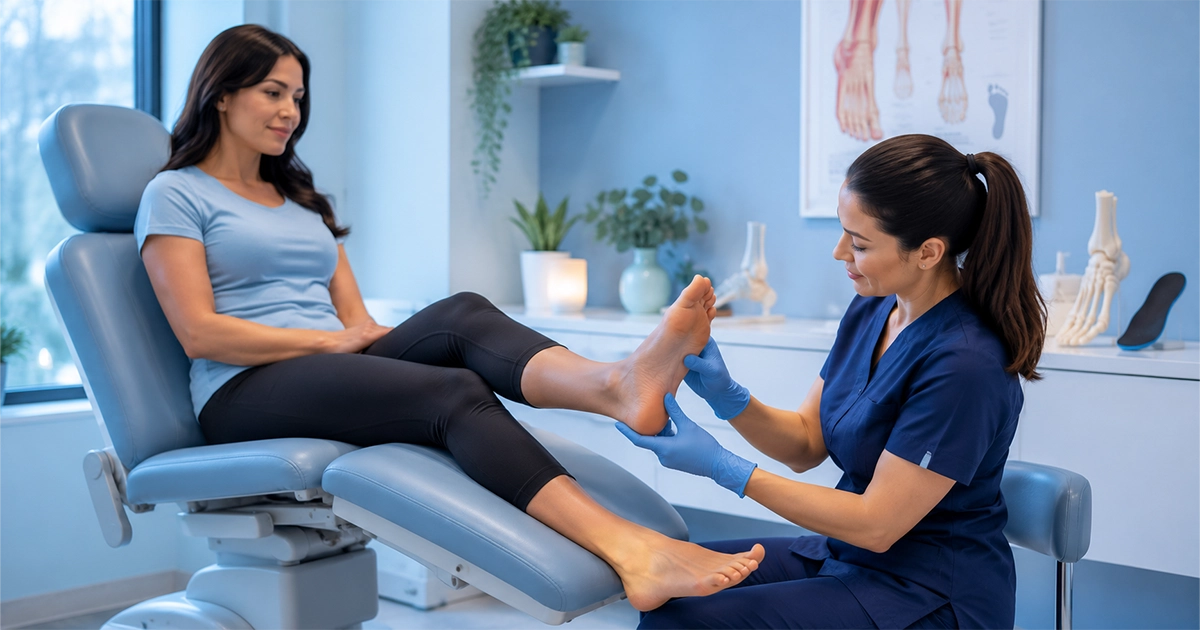
Chiropody may help assess heel pain and plantar fasciitis-style symptoms by reviewing foot mechanics, footwear, pressure points, gait, activity patterns, and orthotic needs. Treatment depends on the cause of pain and may include foot-care guidance, footwear advice, custom orthotics, or referral when a medical assessment is needed.
Heel pain is one of those conditions most people underestimate until it becomes impossible to ignore. The sharp stab underfoot with the first step out of bed. The dull ache that builds through a long shift on your feet. For many Mississauga residents dealing with this, the question is not just “what is wrong?” but “who should I actually see?”
Chiropody is a regulated health profession in Ontario specializing in exactly this concern. A licensed chiropodist assesses the structure and mechanics of the foot, identifies what is driving your specific pattern of heel pain, and develops a care plan built around your individual situation, whether that involves footwear guidance, pressure management, custom orthotics, a referral for imaging, or a combination.
This article explains what plantar fasciitis and heel pain involve, how chiropody addresses them, and what to expect from a heel pain assessment at Innova Integrated Wellness Centre in Mississauga.
What Is Plantar Fasciitis?
The plantar fascia is a thick band of connective tissue running along the bottom of the foot, connecting the heel bone (calcaneus) to the base of the toes. It supports the arch and absorbs shock during movement. When it becomes irritated or undergoes degenerative change at its heel attachment point, the result is plantar fasciitis.
Despite the “-itis” suffix, plantar fasciitis is not primarily inflammatory. Research from NCBI/StatPearls confirms it results from degenerative irritation at the plantar fascia origin rather than inflammatory cell infiltration, meaning purely anti-inflammatory treatment approaches often fall short.
Plantar fasciitis affects approximately 10 percent of the general population and is the most common cause of heel pain in outpatient settings. Eighty-three percent of those affected are active working adults between the ages of 25 and 65, with peak incidence between 40 and 60. It accounts for 11 to 15 percent of all foot symptoms requiring professional care.
Not all plantar heel pain is plantar fasciitis. A 2025 comprehensive review in Cureus confirmed that proper diagnosis requires detailed history, physical examination, and selective imaging to distinguish plantar fasciitis from fat pad atrophy, nerve entrapment, calcaneal stress fractures, and tarsal tunnel syndrome.
Common Signs of Plantar Heel Pain
The symptom pattern of plantar fasciitis is often quite characteristic.
- Morning first-step pain is one of the most consistent features: sharp, stabbing pain at the heel or arch with the first steps after getting out of bed or after prolonged sitting. This reflects the plantar fascia tightening during rest and then being suddenly loaded on first weight-bearing.
- Pain that eases with movement but returns after prolonged activity is also typical. Many patients describe it as worst first thing in the morning, improving after 10 to 15 minutes of walking, then worsening again after extended periods of standing or activity.
- Localized tenderness at the inner heel, specifically at the medial calcaneal tuberosity where the plantar fascia attaches, is the most common examination finding. Pressing firmly on this spot typically reproduces the patient’s familiar pain.
- Arch pain extending forward from the heel along the inside of the foot is also frequently reported.
The absence of any single feature does not rule out plantar fasciitis, and a qualified clinician assessment is the only reliable way to confirm what is driving your specific symptoms.
Why Heel Pain Can Happen
Plantar fasciitis is multifactorial in origin, with overuse stress as the most common contributor. Key contributing factors include:
- Biomechanical factors: Flat feet, high arches, or excessive pronation increase mechanical load on the plantar fascia and its heel attachment. How the foot moves through each step distributes stress differently depending on its structure, and repeated concentration at one point leads to irritation and degeneration.
- Footwear: Shoes with inadequate arch support, worn-out soles, or inappropriate heel height significantly increase plantar fascia load. Flat footwear, flip-flops, and barefoot walking on hard surfaces are common contributors.
- Occupational load: Jobs requiring prolonged standing or walking on hard floors including healthcare, retail, teaching, and hospitality are consistently associated with higher rates of plantar heel pain. Research on working adult populations confirms a significantly higher occurrence in those with manual and routine occupations compared to sedentary roles.
- Calf and Achilles tightness: Reduced calf and soleus flexibility increases tensile load on the plantar fascia during the push-off phase of walking, contributing to irritation at the fascial attachment.
- Activity changes and body weight: Sudden increases in training volume and increased body weight both raise cumulative mechanical load on the plantar fascia.
For patients also managing diabetes, new or changing heel and arch pain warrants earlier assessment given the elevated risk of impaired healing and infection. Neal Andrews provides both general and diabetic foot care within his scope of practice at Innova.
How a Chiropodist Assesses Heel Pain
When you book a chiropody appointment for heel pain at Innova Integrated Wellness Centre, your assessment begins with a detailed clinical history covering symptom location, onset, pattern, occupational demands, footwear habits, exercise routine, and relevant medical history. Neal Andrews, registered with the College of Chiropodists of Ontario, then conducts a structured physical examination that includes:
- Foot structure and alignment: Arch shape, heel alignment, toe positioning, and visible structural factors affecting load distribution.
- Gait and biomechanics: How you walk. Gait analysis identifies movement patterns; including pronation or supination, that may be concentrating stress on the plantar fascia.
- Palpation and clinical testing: Systematic pressure at specific anatomical locations to identify the origin of your pain. The windlass test and other provocation tests help differentiate fascial pain from nerve or bony causes.
- Footwear assessment: Your current shoes, their wear patterns, and their suitability for your foot type and daily demands.
Where imaging is required, X-ray for bony assessment or ultrasound for fascial evaluation – Neal will advise on appropriate referral pathways, since chiropodists in Ontario cannot order imaging directly.
Footwear, Orthotics, and Gait Considerations
One of the most clinically significant components of heel pain management is the combination of footwear guidance and orthotic support.
The 2023 Clinical Practice Guidelines from the Journal of Orthopaedic and Sports Physical Therapy (JOSPT) recommend foot orthoses prefabricated or custom-fabricated, in combination with other treatments for both short-term and long-term plantar fasciitis management. A 2025 expert consensus summary confirmed that biomechanical support, including custom foot orthoses and footwear guidance, is among the safe and effective approaches for plantar fasciitis alongside stretching programs.
- Custom orthotics prescribed by a chiropodist address your specific biomechanical pattern by redistributing pressure away from the plantar fascia attachment, supporting the medial arch, and improving gait efficiency. They differ meaningfully from over-the-counter inserts in that they are shaped to the specific contours and movement characteristics of your foot.
- Footwear guidance addresses which shoe types suit your foot structure, what features to look for in athletic or occupational footwear, and which footwear choices may be aggravating your symptoms. Many patients find this practically useful from the first appointment.
- Stretching and loading programs for the calf and plantar fascia are typically recommended alongside orthotic and footwear changes to improve tissue flexibility and load-management capacity.
For patients whose heel pain has effects extending up the lower limb, Innova’s physiotherapy team can address gait and movement factors beyond the foot, and registered massage therapy can help manage calf and soft-tissue tightness as a complement to chiropody care.
Innova also offers shockwave therapy (ESWT) as part of chiropody for chronic heel pain that has not responded adequately to conservative approaches.
When Heel Pain Needs Medical Assessment
While most plantar fasciitis cases respond to conservative care, certain presentations require prompt medical evaluation before or alongside a chiropody assessment:
- Sudden, severe heel pain following a fall, jump, or direct impact
- Significant swelling, bruising, or rapid-onset warmth around the heel or ankle
- Heel pain accompanied by systemic symptoms such as fever or unexplained weight loss
- Numbness or tingling in the heel, arch, or foot suggesting nerve involvement
- Pain present equally at rest that does not vary with weight-bearing
- Patients with diabetes or peripheral vascular disease experiencing new or changing foot pain
According to the College of Chiropodists of Ontario, chiropodists are trained to identify these presentations and coordinate appropriate referral. At Innova, Neal Andrews discusses clinical findings and any referral recommendations transparently at every appointment.
Chiropody Support at Innova in Mississauga
Neal Andrews is a Registered Chiropodist at Innova Integrated Wellness Centre, registered with the College of Chiropodists of Ontario. Neal specializes in foot and ankle assessment, gait analysis, biomechanics, sports chiropody, and diabetic foot care, and is certified in advanced soft tissue procedures. He brings a structured, assessment-led approach to heel pain management informed by his biomechanical training and clinical experience across a broad range of patient presentations.
At Innova Integrated Wellness Centre, chiropody operates within an integrated care model that connects directly with physiotherapy, registered massage therapy, chiropractic care, and nutrition services when a patient’s presentation extends beyond the foot itself. Heel pain often involves calf tightness, altered gait, postural loading, and metabolic or nutritional factors best addressed across disciplines.
Chiropody services at Innova are covered under most extended health benefit plans that include foot care or chiropody. Direct billing is not available for chiropody; patients pay at the time of service and submit receipts to their insurer, with a detailed receipt provided. Chiropodists can provide orthotics prescriptions for insurance purposes when custom orthotics are clinically indicated. No physician referral is required to book.
Conclusion
Heel pain has a way of normalizing itself over time. You adjust your stride, choose different shoes, avoid certain activities, and gradually accept a lower baseline of comfort as the new standard. That does not have to be the endpoint.
Plantar fasciitis and heel pain are among the most common and most treatable musculoskeletal foot complaints, and a structured, assessment-led chiropody approach; addressing foot mechanics, footwear, gait, and biomechanical support, offers a clear and practical path toward meaningful improvement for most people.
At Innova Integrated Wellness Centre in Mississauga, chiropody is delivered by Neal Andrews within an integrated model that connects your foot care to physiotherapy, registered massage therapy, and the full scope of the clinic’s services when your presentation calls for it.
No referral is required. Your first appointment begins with a thorough assessment not a generic recommendation.
Book a chiropody assessment at Innova Integrated Wellness Centre in Mississauga today. Book an Appointment
Frequently Asked Questions
Yes. Chiropodists assess and manage conditions affecting the foot and lower limb, including heel pain and plantar fasciitis. An assessment examines foot structure, gait, footwear, pressure patterns, and activity demands to identify what is driving your symptoms. Care may include footwear guidance, custom orthotics, taping, loading and stretching programs, or imaging referral where required.
Plantar fasciitis is degenerative irritation of the plantar fascia at its heel bone attachment. It affects approximately 10 percent of the general population, with 83 percent of cases in working adults aged 25 to 65. Despite its name, it is not primarily an inflammatory condition; it is driven by cumulative mechanical overload, which influences both how it is diagnosed and how it is treated.
The most characteristic pattern is sharp heel or arch pain with the first steps after rest, easing somewhat with movement but returning after prolonged standing or activity. Inner heel tenderness on firm pressure is typical on examination. Other conditions including nerve entrapment and calcaneal stress fractures can produce similar patterns, which is why a qualified clinical assessment is more reliable than self-diagnosis.
Yes, when prescribed as part of a combined treatment approach. The 2023 JOSPT Clinical Practice Guidelines recommend foot orthoses in combination with other treatments for both short-term and longer-term plantar fasciitis management. Custom orthotics address your individual biomechanical pattern redistributing pressure, supporting the arch, and improving gait efficiency in ways that prefabricated inserts may not achieve for your specific foot structure.
Seek prompt medical evaluation if you experience sudden severe heel pain after trauma, significant swelling or bruising, fever alongside heel pain, numbness or tingling in the foot, or pain that is equally present at rest. Patients with diabetes or vascular conditions should seek early professional assessment for any new foot pain. Chiropodists are trained to identify these presentations and coordinate referral when required.
Chiropody is covered under most extended health benefit plans that include foot care in their coverage. Coverage amounts vary by plan. Chiropodists can provide orthotics prescriptions for insurance purposes when custom orthotics are clinically indicated. At Innova, direct billing is not available for chiropody; patients pay at the time of service and submit receipts to their insurer. The Innova team can help clarify coverage before your first appointment.
Chiropody at Innova is provided by Neal Andrews, a Registered Chiropodist registered with the College of Chiropodists of Ontario. Neal specializes in foot and ankle assessment, gait analysis, biomechanics, sports chiropody, and diabetic foot care and is certified in advanced soft tissue procedures.